
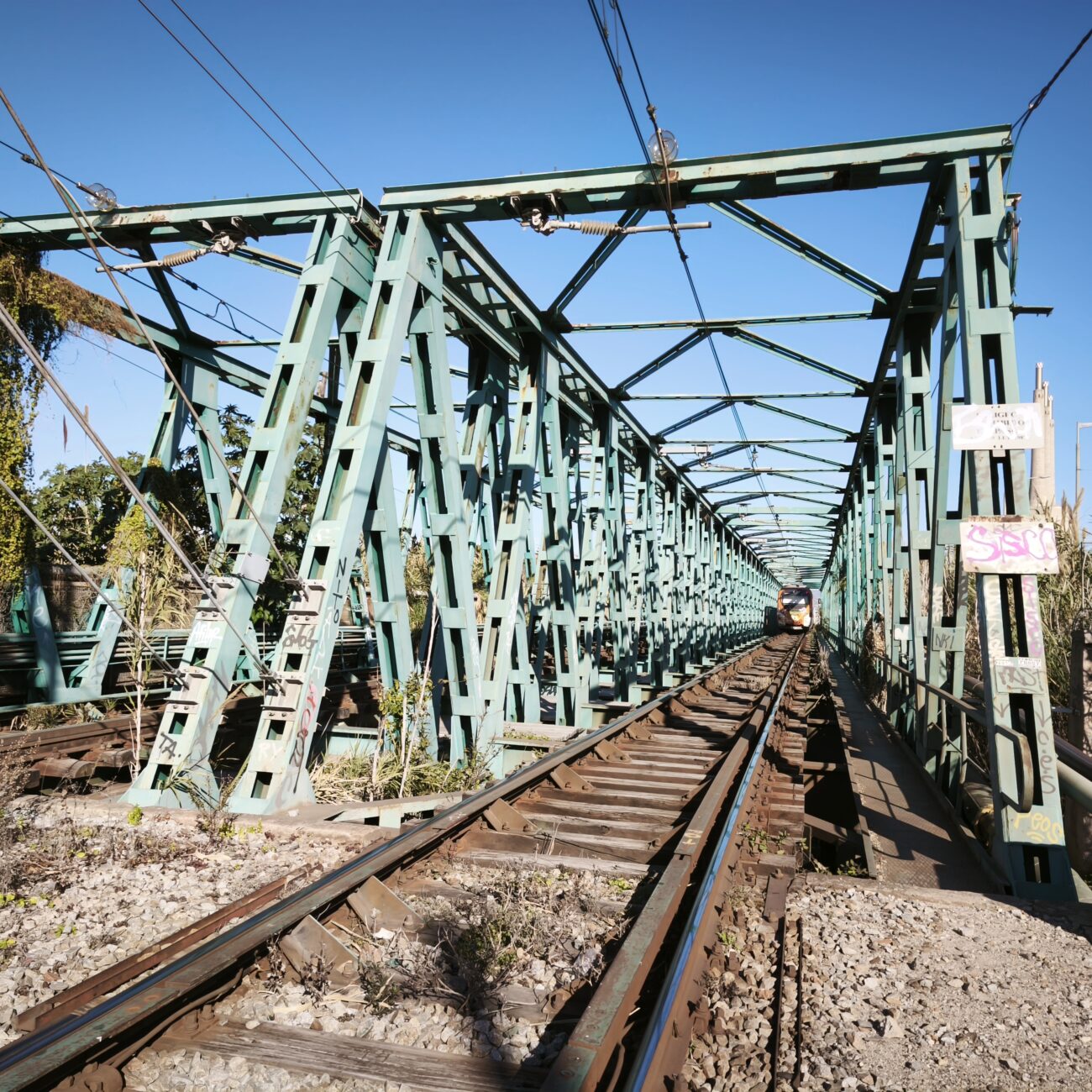
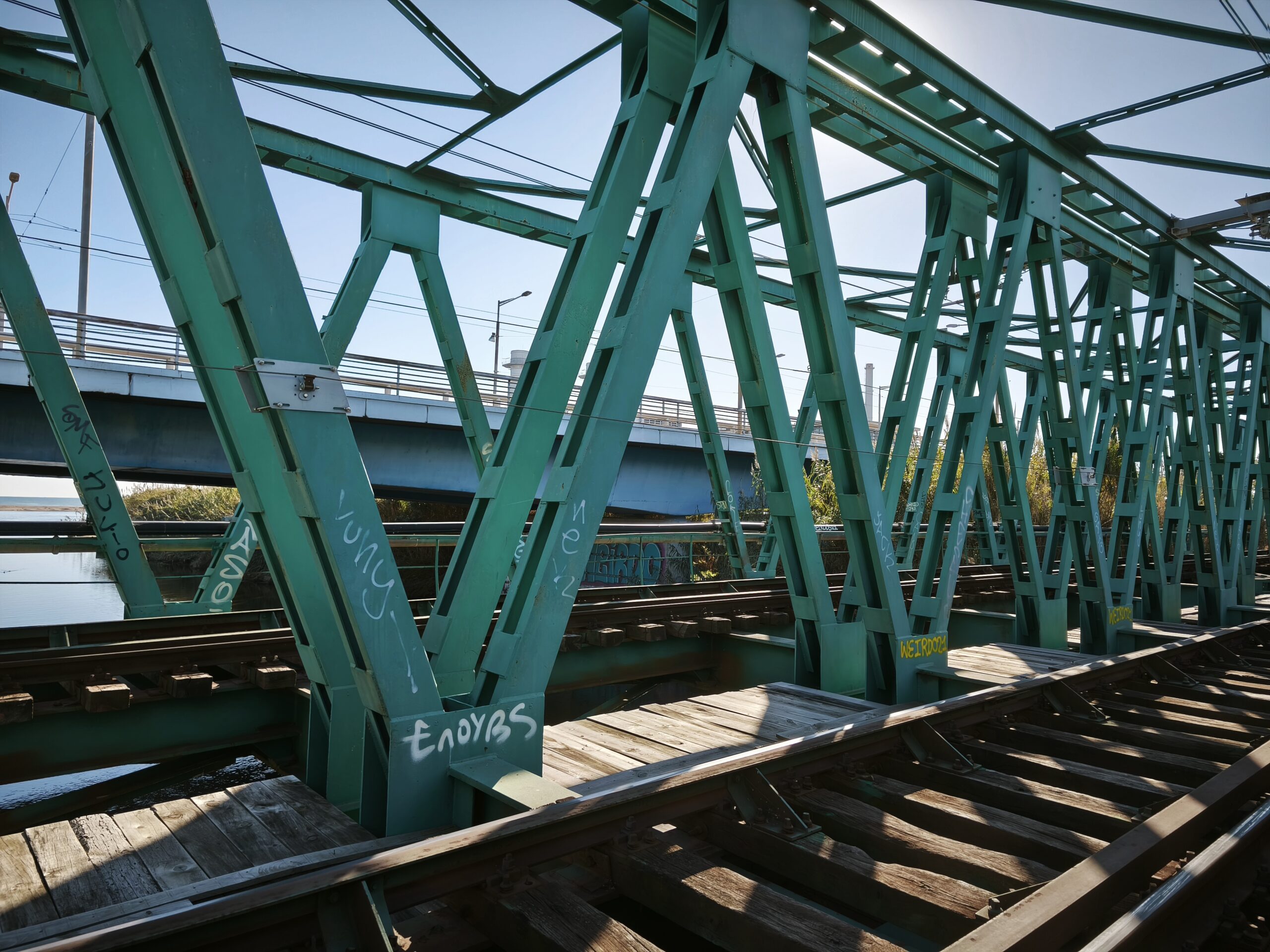
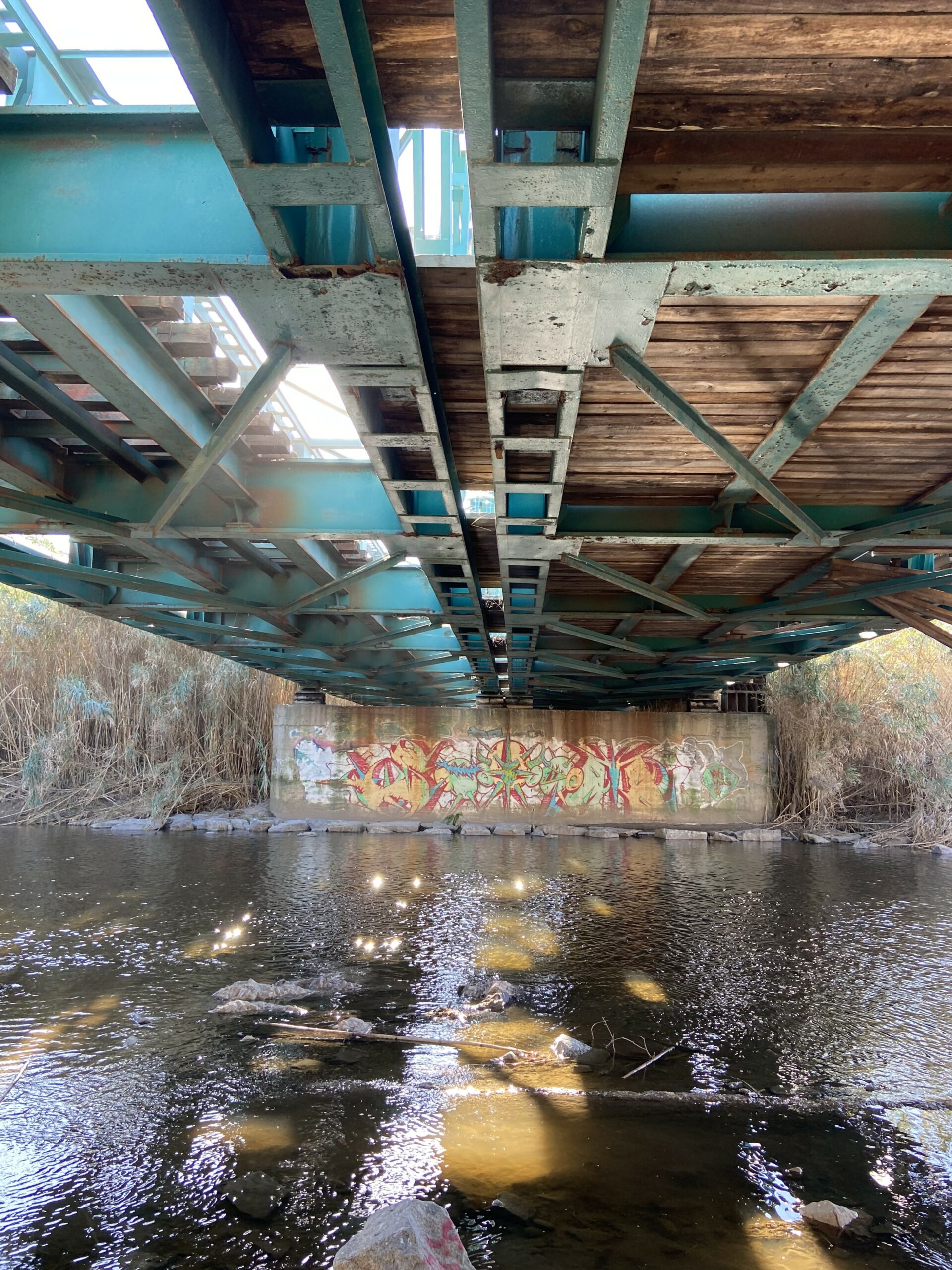
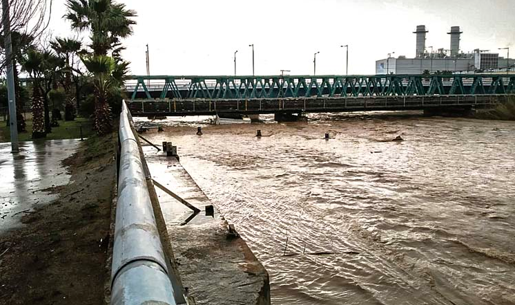
The Besòs River exhibits a markedly torrential behaviour and a history of particularly significant flooding events, such as the floods of 1962 and, more recently, Storm Gloria in 2020, which highlighted its high capacity to convey large flows and drag materials along its course. At its mouth stands the bridge of the historic Barcelona–Mataró railway line, a double-deck metal structure made up of Warren trusses.
Although the bridge has been found to be structurally suitable for supporting railway loads, it presents shortcomings from a hydraulic standpoint, since during extraordinary flood events the water level could significantly exceed the available clearance. In order to improve the interaction between the structure and the river channel, several alternatives with different levels of intervention have been studied, taking into account the many existing constraints: the bridge typology and condition, the intensity of railway traffic, the complex urban integration, the presence of multiple utilities crossing it, the environmental restrictions of the surrounding area, and the characteristics of the torrential riverbed itself.
The project prepared by INES aims to reduce the potential structural damage that could occur to the bridge as a result of water pressure and the impact of elements carried by the river during an extraordinary flood event. All of this is proposed from an approach that seeks to balance the technical, operational, and environmental feasibility of the adopted solution.
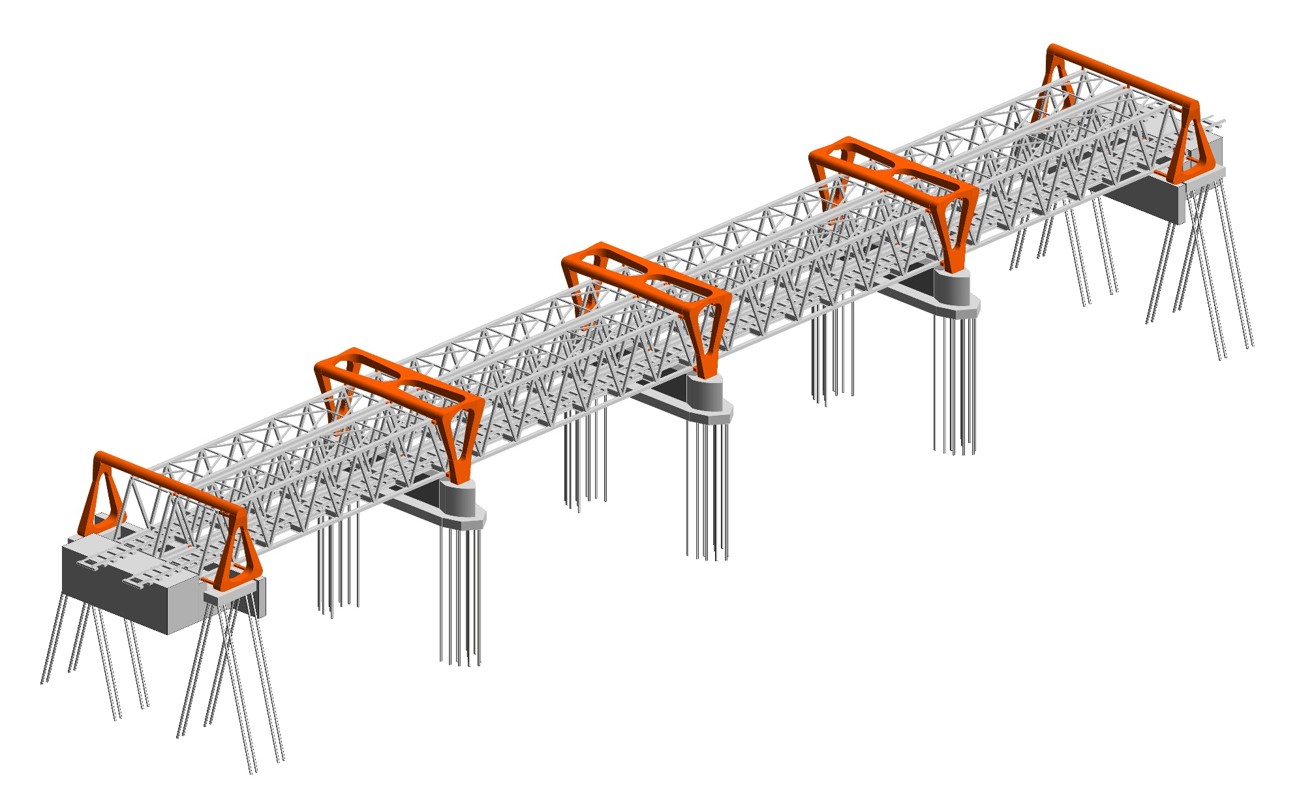
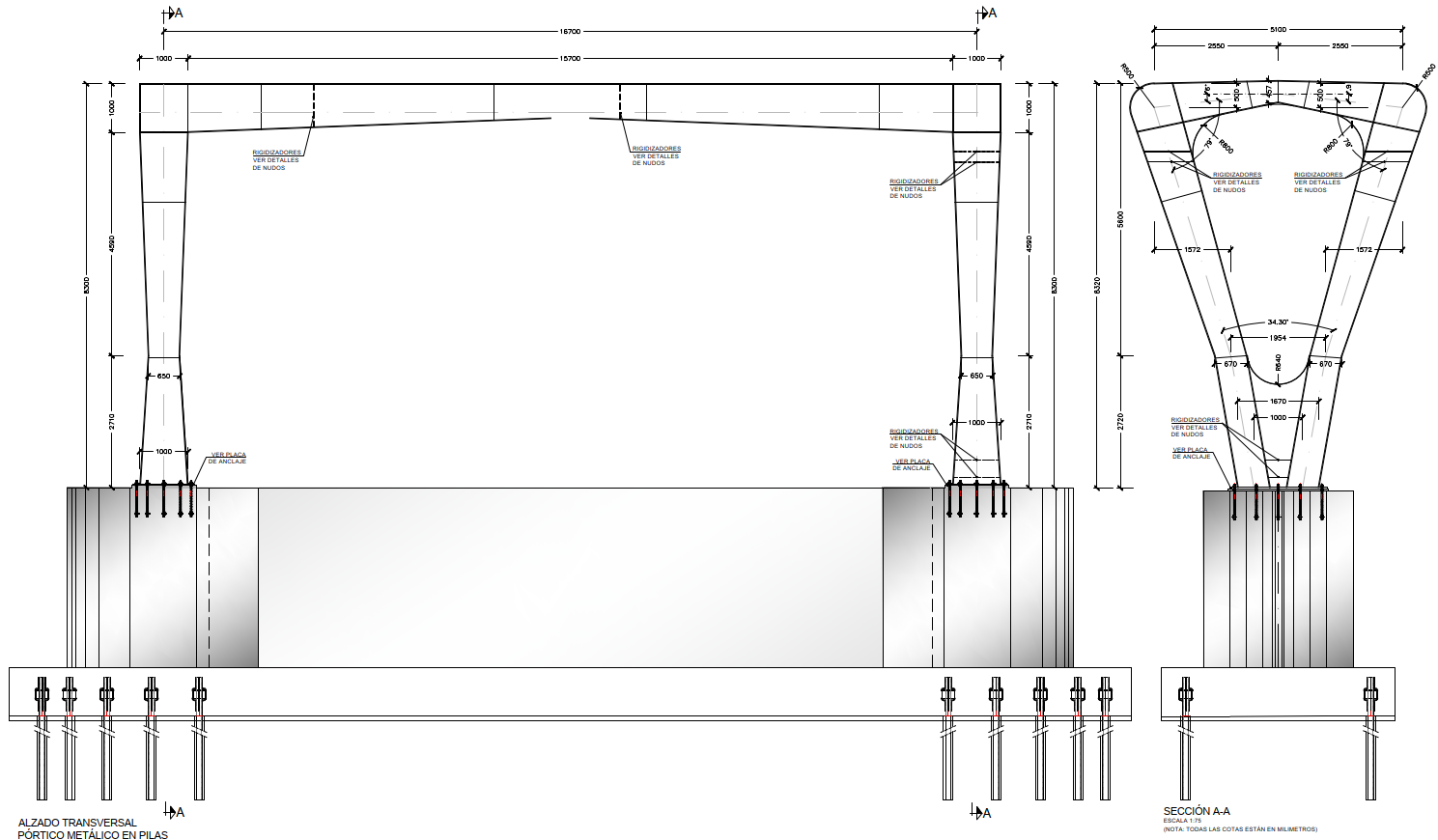
For this purpose, a protection measure has been designed for the pile foundations against the risk of scour, and external steel frames have been defined to act as retaining elements, preventing the displacement and collapse of the deck in the event that it is unable to withstand the action of the water and the associated impacts. These frames enclose both decks and create different vertical and transverse support points on the metal structure in order to guarantee its stability during major flood events.
To provide the best experiences, we use technologies like cookies to store and/or access device information. Consenting to these technologies will allow us to process data such as browsing behavior or unique IDs on this site. Not consenting or withdrawing consent, may adversely affect certain features and functions.