
The Castelldefels station is located in the centre of the town of Castelldefels, Barcelona, at kilometer point 658+900 of Line 200 Madrid-Chamartín-Barcelona-França. The station building dates back to 1881 and is listed as a Cultural Asset of Local Interest.
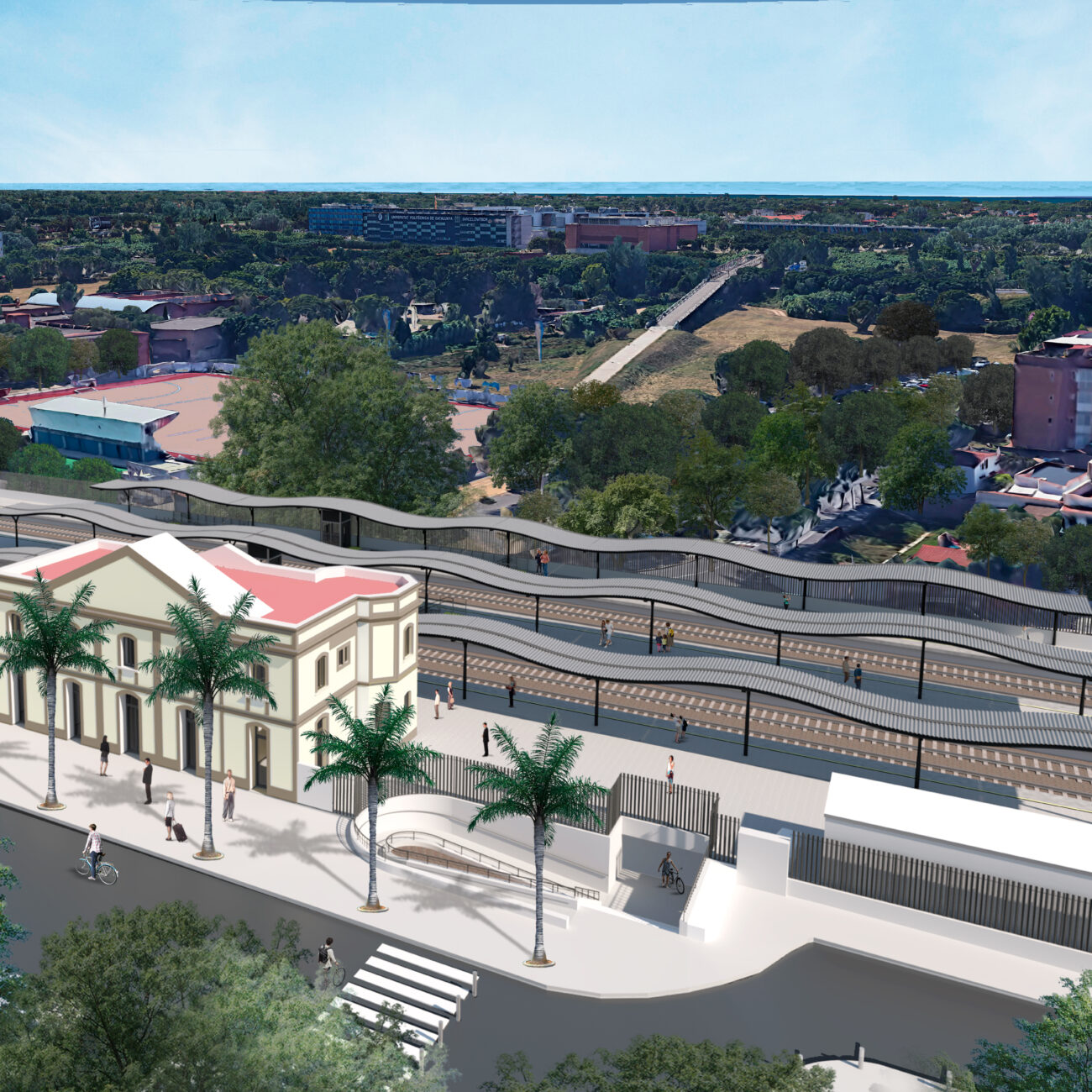
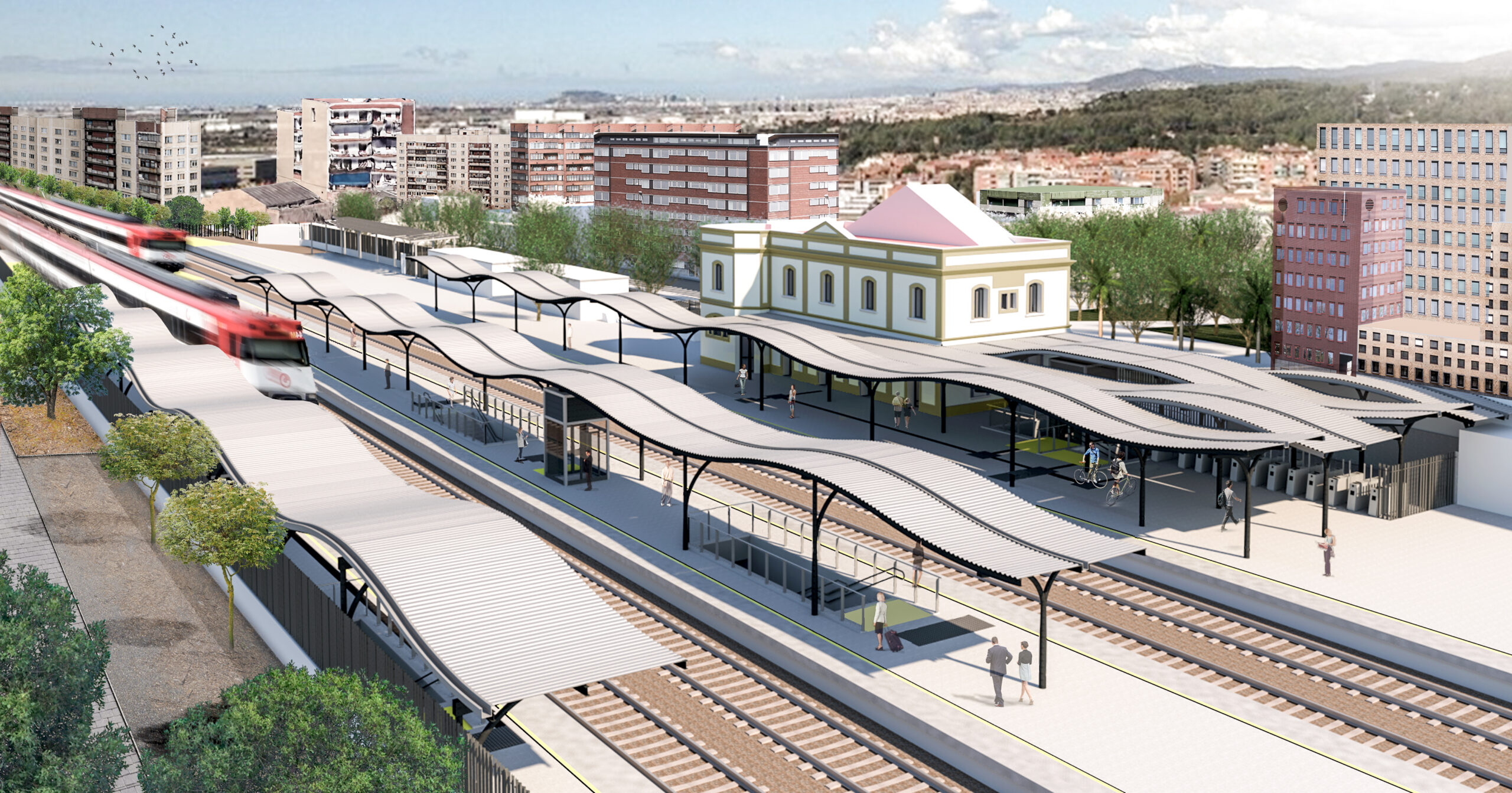
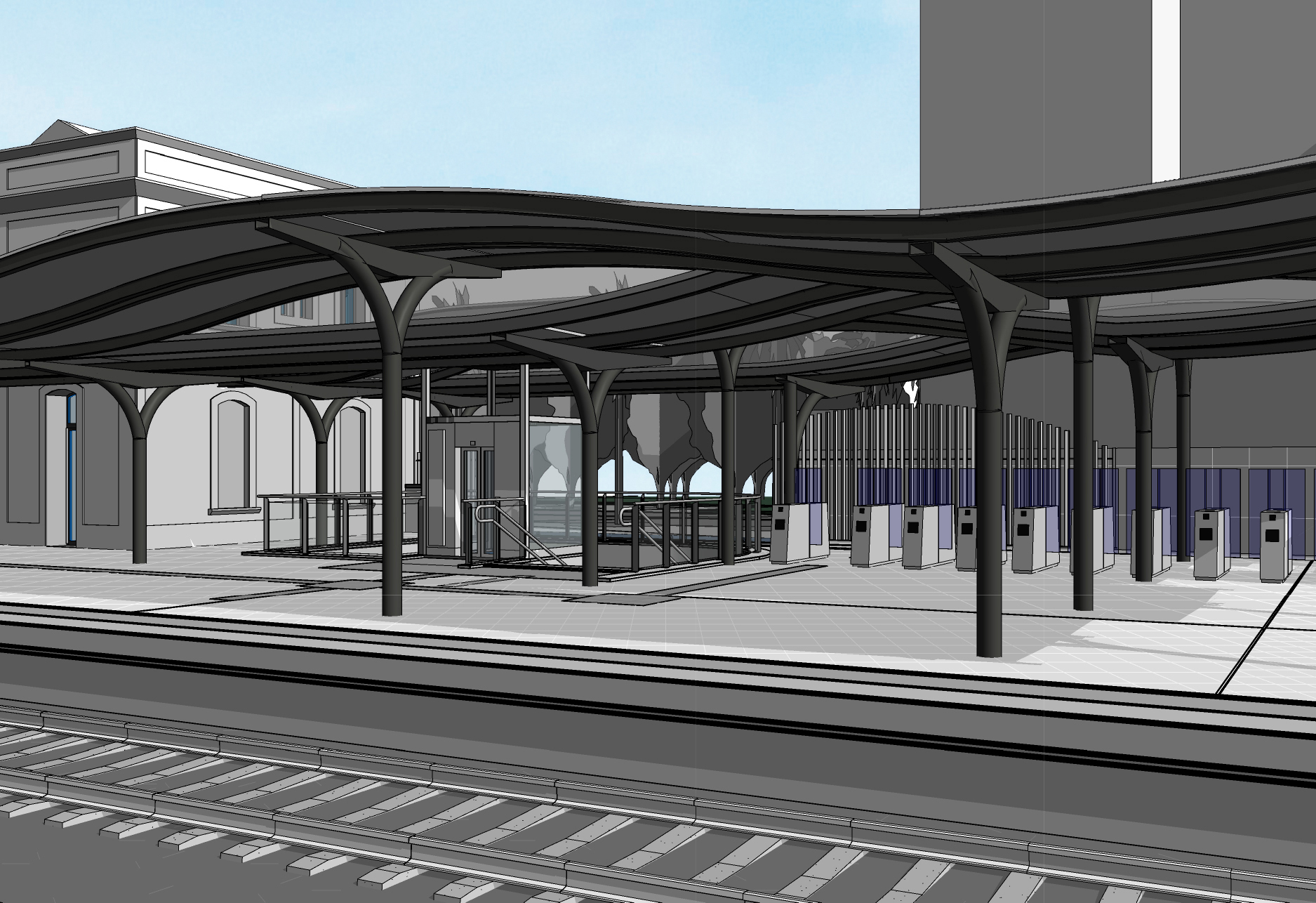
The purpose of this project is to define all the architectural and building services works required for the full functionality of Castelldefels Station, while also improving its operation by introducing a new fare control barrier and new 80 m-long platform canopies.
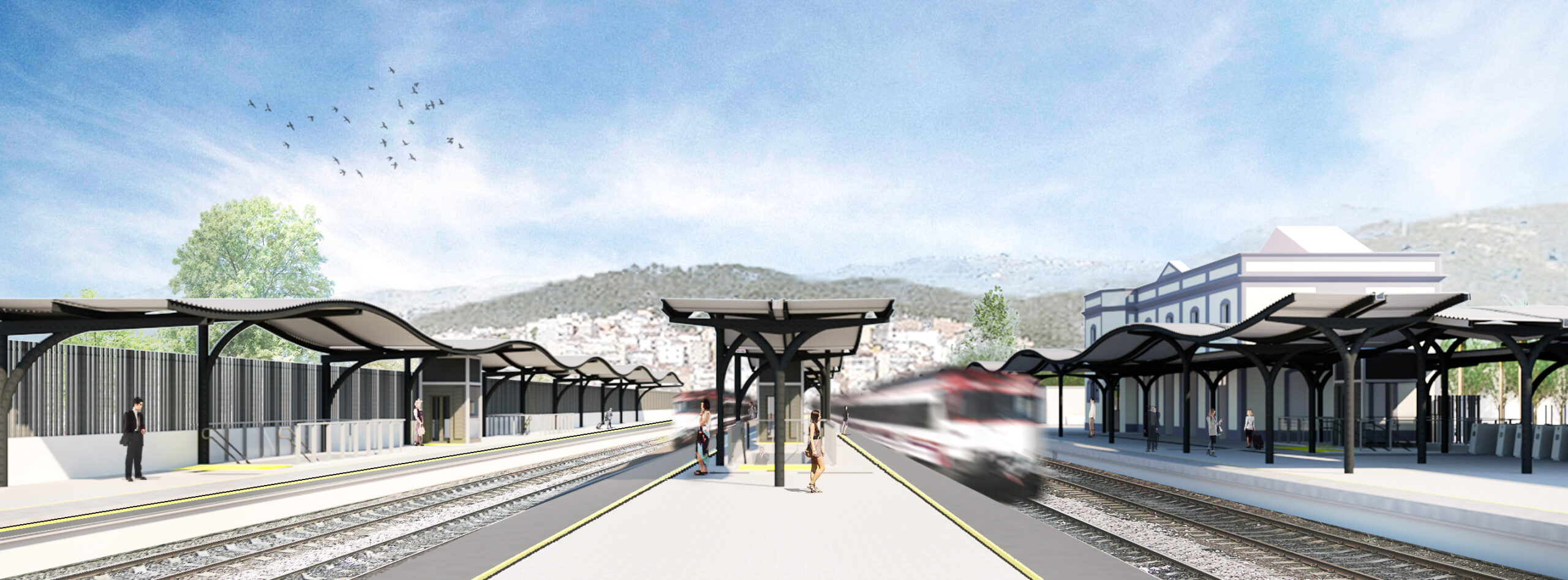
The canopies serve as a protective element for the station’s entire accessible route, including the underpass, access stairs, lifts, and exit module, with their design being closely linked to the surrounding environment. Their undulating form evokes a maritime geometry, recalling Castelldefels’ relationship with the sea, while also conveying a very suggestive sense of lightness and delicacy. In addition to their evident functionality, the choice of metallic materials is also supported by Castelldefels’ industrial past. The aim is to develop both a structural and design model that defines a standard scheme to be replicated on the different platforms, adapting to their specific needs.
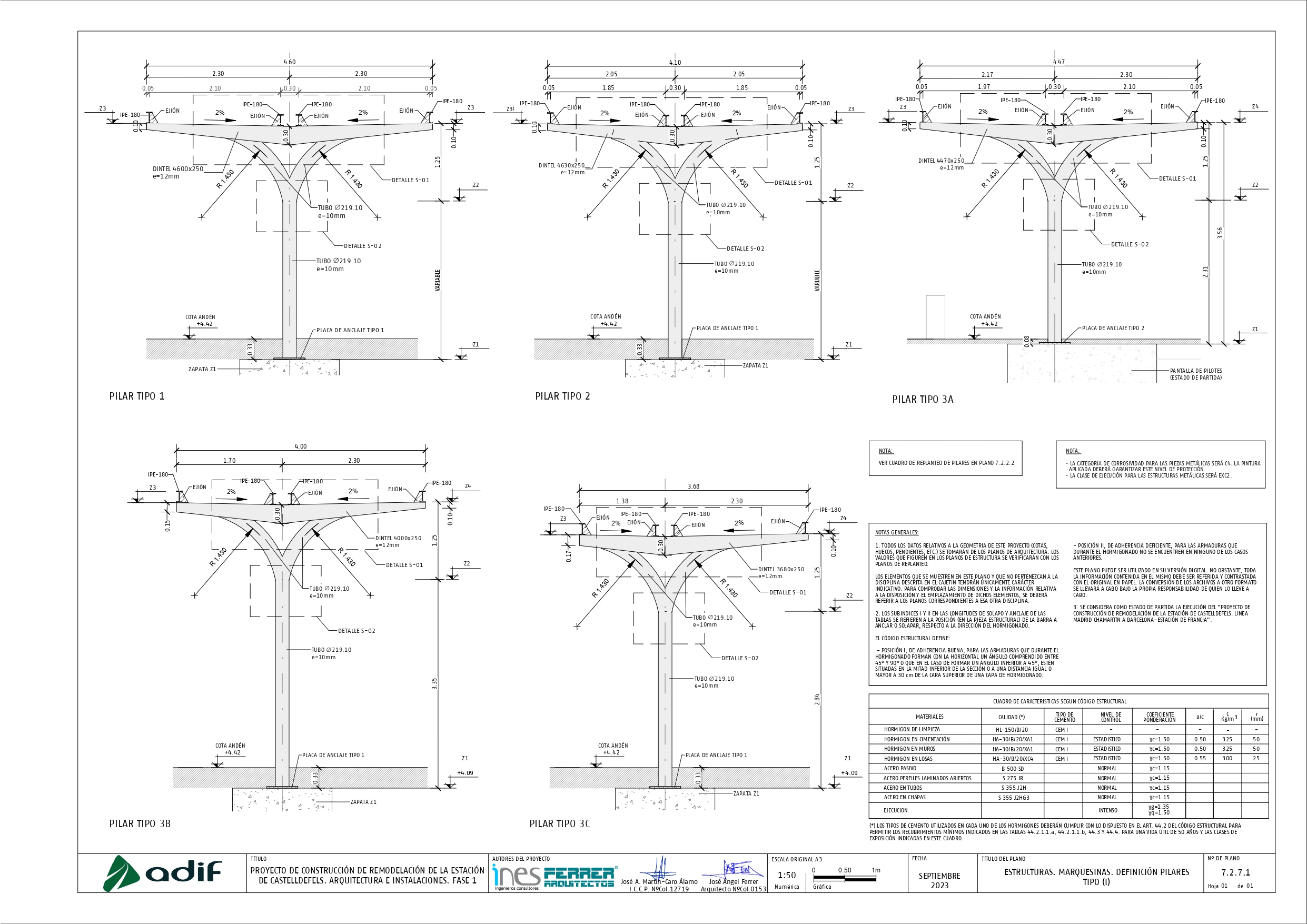
From a structural standpoint, the canopies are defined by a lightweight steel structure with shallow foundations based on spread footings. The canopies consist of covering elements with different curvatures or geometries, supported on a series of purlins made of closed structural steel sections that provide their undulating profile. These covering elements will be given a minimum transverse slope to allow rainwater drainage.
The station building has heritage value, so its conservation and the coherent approach of the canopy elements towards its façade are guaranteed at all times, avoiding direct contact. This approach to the existing construction on each canopy side is achieved through a flat geometry aligned with the cornice line of the heritage building, emphasizing the moulding level through its geometry and softening the junction between the two.
To provide the best experiences, we use technologies like cookies to store and/or access device information. Consenting to these technologies will allow us to process data such as browsing behavior or unique IDs on this site. Not consenting or withdrawing consent, may adversely affect certain features and functions.