
The Central Park forms part of the Urban Development Project for the Business District planning area, which is integrated into the major urban regeneration initiative for the northern area of Madrid led by the City Council and the Community of Madrid.
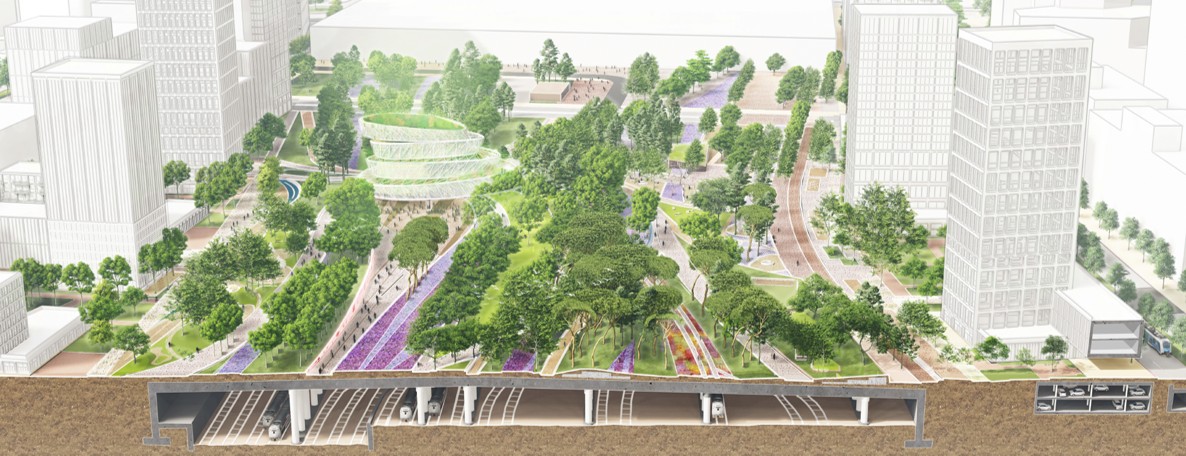
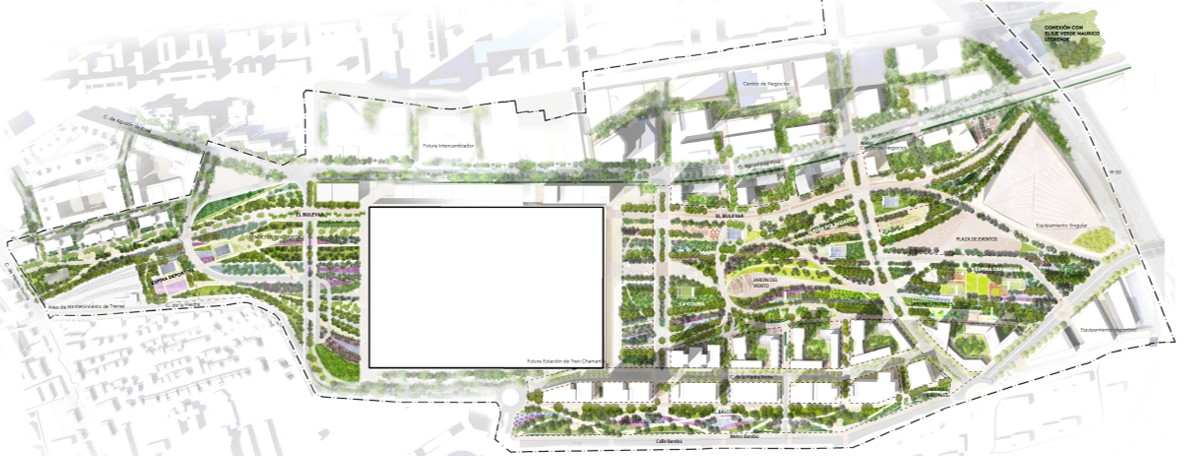
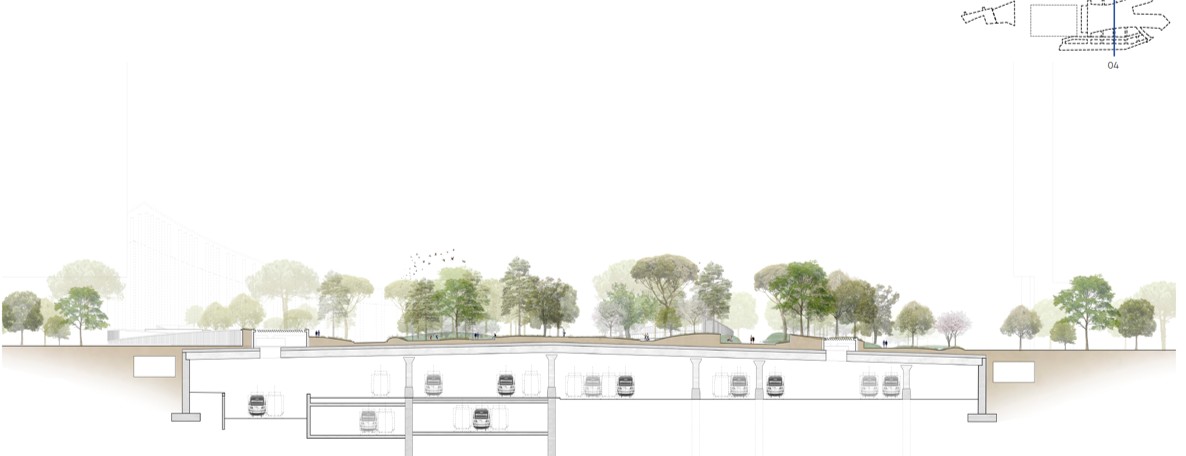
This park completes the project to cover the track area at the northern and southern ends of Chamartín station through the design of a vibrant and dynamic park that connects, at an urban level, neighbourhoods that have historically been divided by the railway infrastructure.
The park’s design emerges from the structure of the railway track bundle over which this new green lung will be built. It connects with the surrounding neighbourhoods and will feature a distinctive element at its central point: a large spiral-shaped vertical garden that will channel the breeze into its interior, providing shade and coolness.
INES Ingenieros actively participates in the design of the park with the main objective of coordinating the conceptual needs of the central park with the constraints arising from the construction of a large green area—with large trees, different environments and a complex road system—above the tracks of one of the busiest passenger stations in Spain.
Among the planned interventions, the Wind Garden stands out as an emblematic feature that will become a new landmark for the city of Madrid. Spiral in shape, this singular green structure is located at the centre of the park and is covered with vegetation to create a pleasant microclimate. This large vertical garden rises above the tree canopies to capture breezes and channel them through its vegetated envelope, reducing the ambient temperature and creating a cool interior space that will become a central meeting point within the park.
The design of the Wind Garden is based on three elements—structure, inner skin and outer skin—each of which performs a specific function: load-bearing system, vegetation support and support for the digital layer and wind filter, respectively.
The structure rises from the ground, developing a helicoid open to the sky formed by tubular metal profiles with a cylindrical section. This set of structural elements, in addition to generating the desired geometry and being self-supporting, makes it possible to support the two skins that envelop it, as well as an internal maintenance walkway.
To provide the best experiences, we use technologies like cookies to store and/or access device information. Consenting to these technologies will allow us to process data such as browsing behavior or unique IDs on this site. Not consenting or withdrawing consent, may adversely affect certain features and functions.