
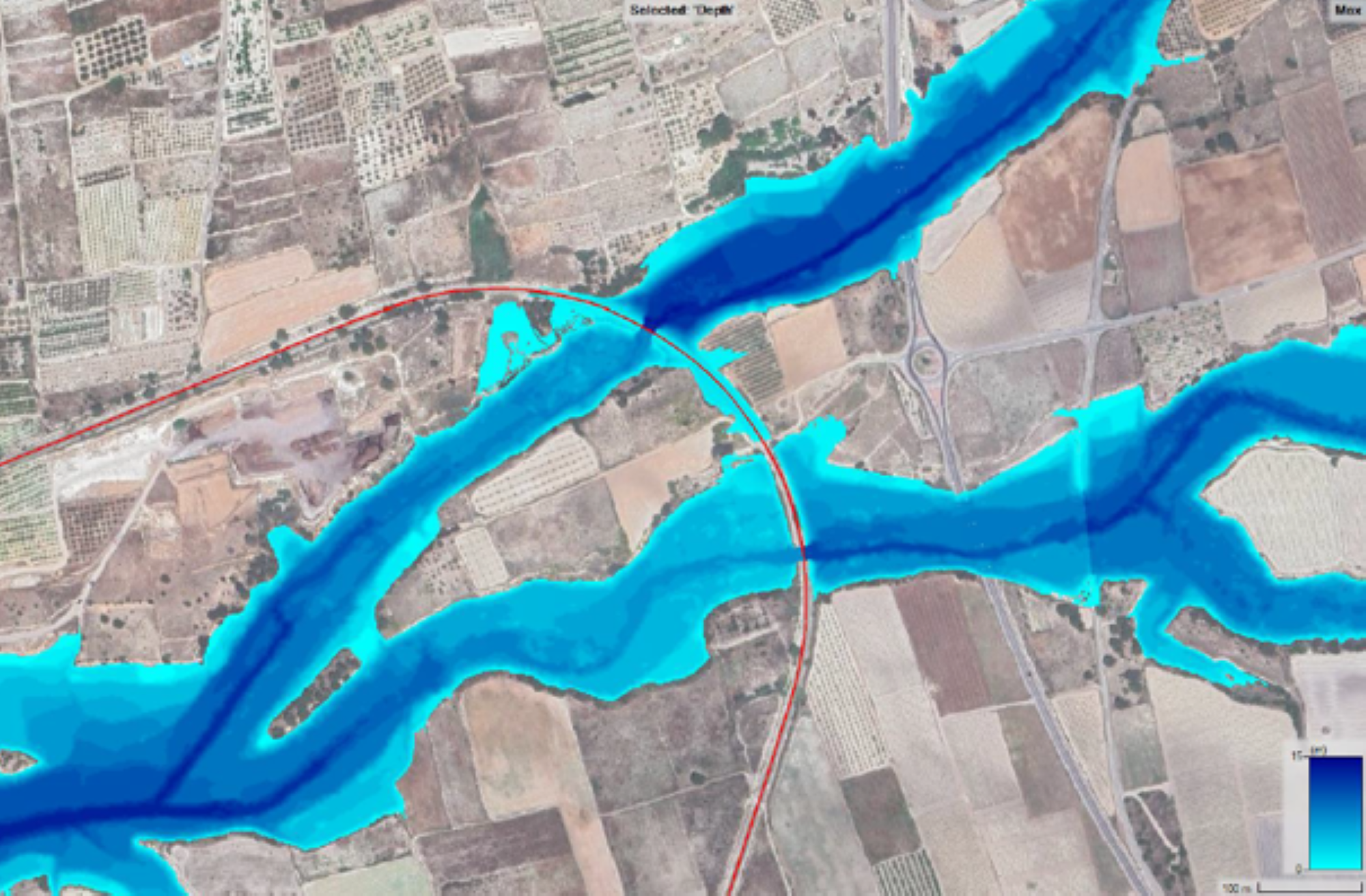
The study area where the new bridge is located is situated in the municipalities of Benigànim, Quatretonda, and La Pobla del Duc (Valencia), in the vicinity of the Xàtiva-Alcoi railway line, between chainages (PKs) 15+539 and 17+337. These sections run close to the eastern edge of the Bellús Reservoir, bypassing it through a route featuring several curves. The filling of the reservoir results in impacts on several points of the railway line, particularly where it crosses the Torrella and Forcall ravines, which, over time, has caused both interruptions to rail operations and limitations on the dam’s flood control capacity.
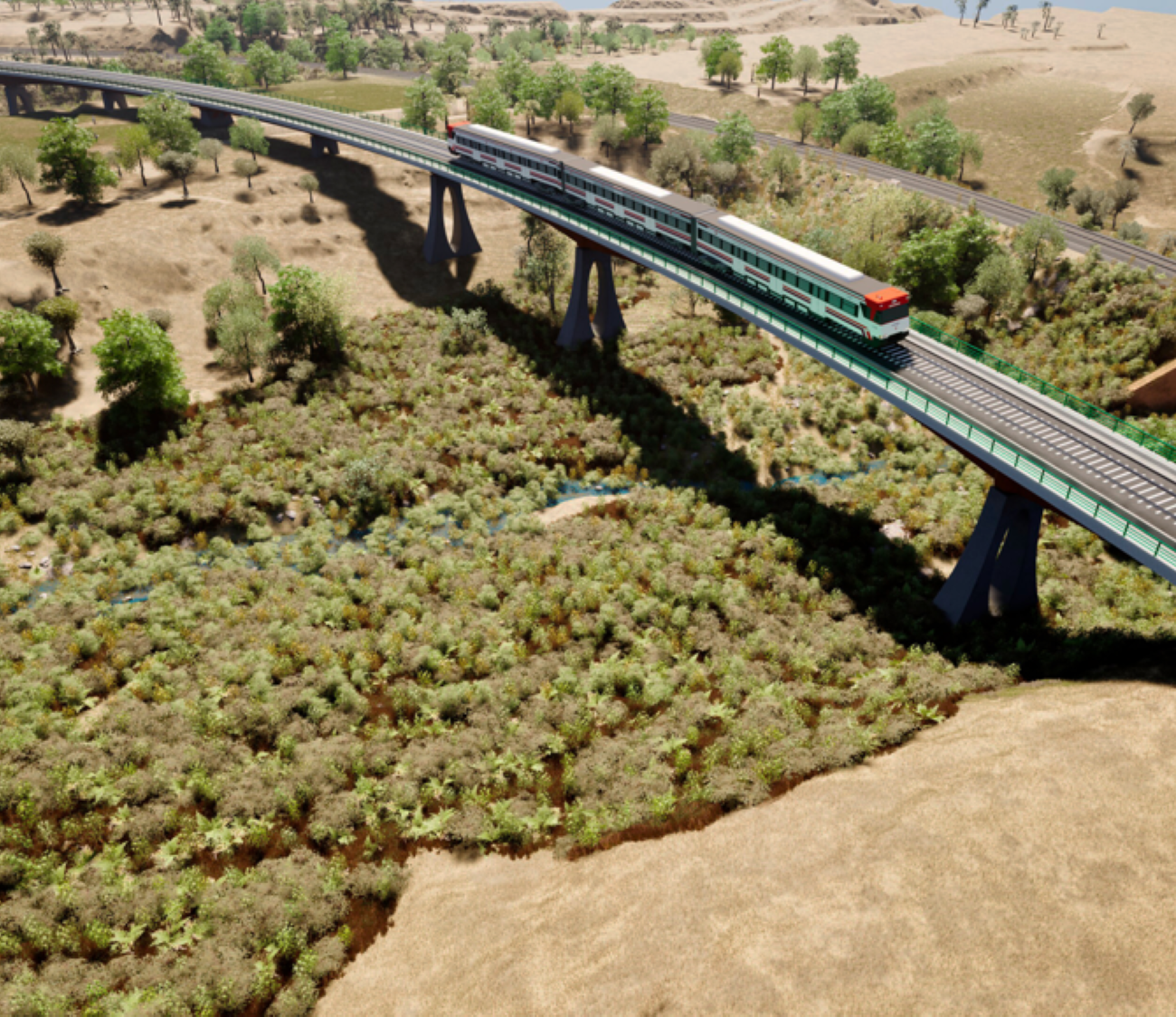
In these ravines, there are two transverse drainage works, each consisting of two semicircular masonry arch vaults with a free span of 6.00 m, whose hydraulic capacity is clearly insufficient. Given this problem, and in order not to limit the reservoir’s regulatory capacity, it was decided to execute an alternative alignment. This solution basically consists of a large bridge designed to meet the established requirements: significantly increase hydraulic capacity, improve the line’s alignment, minimize disruption to railway operations, and cause minimal environmental impact.
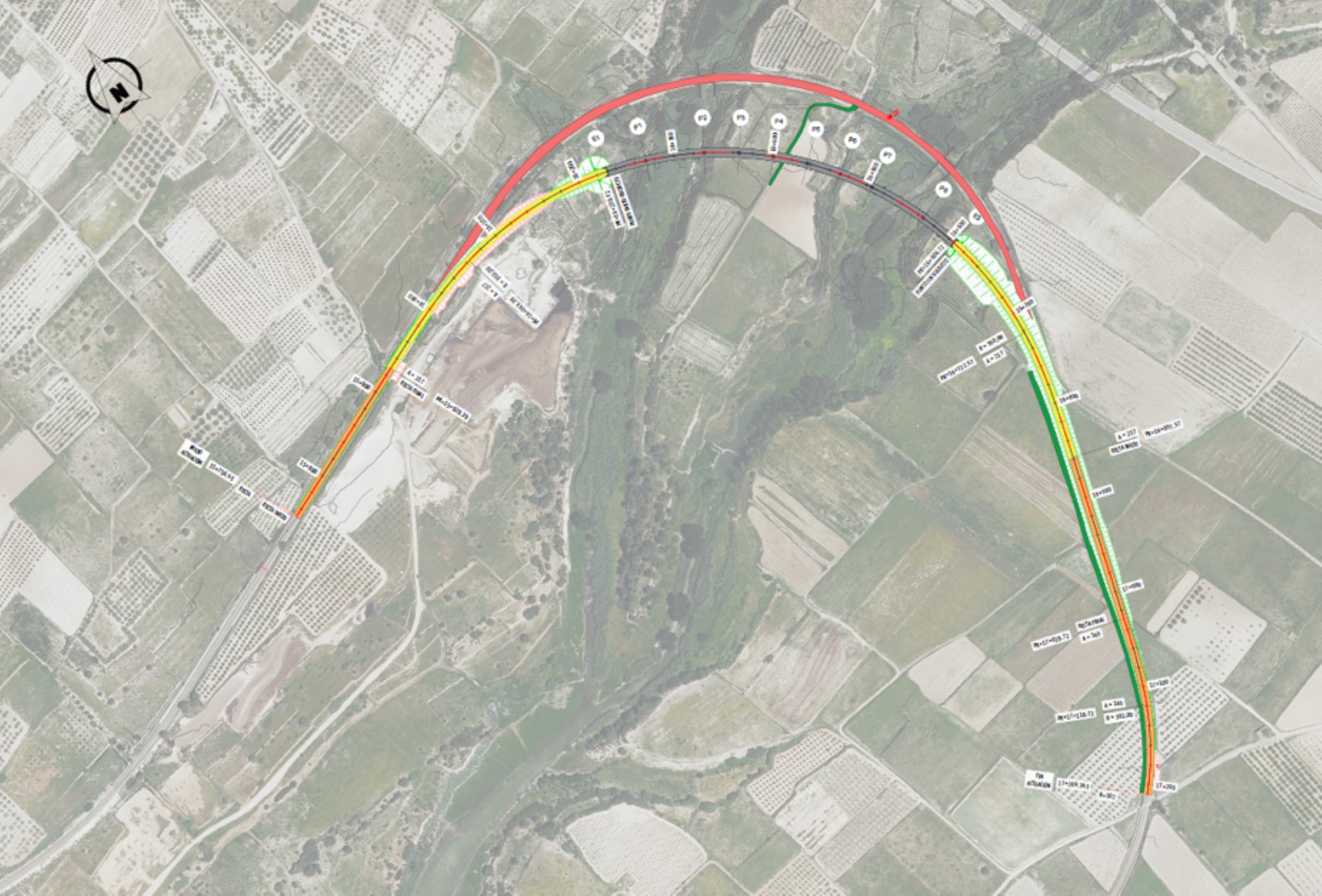
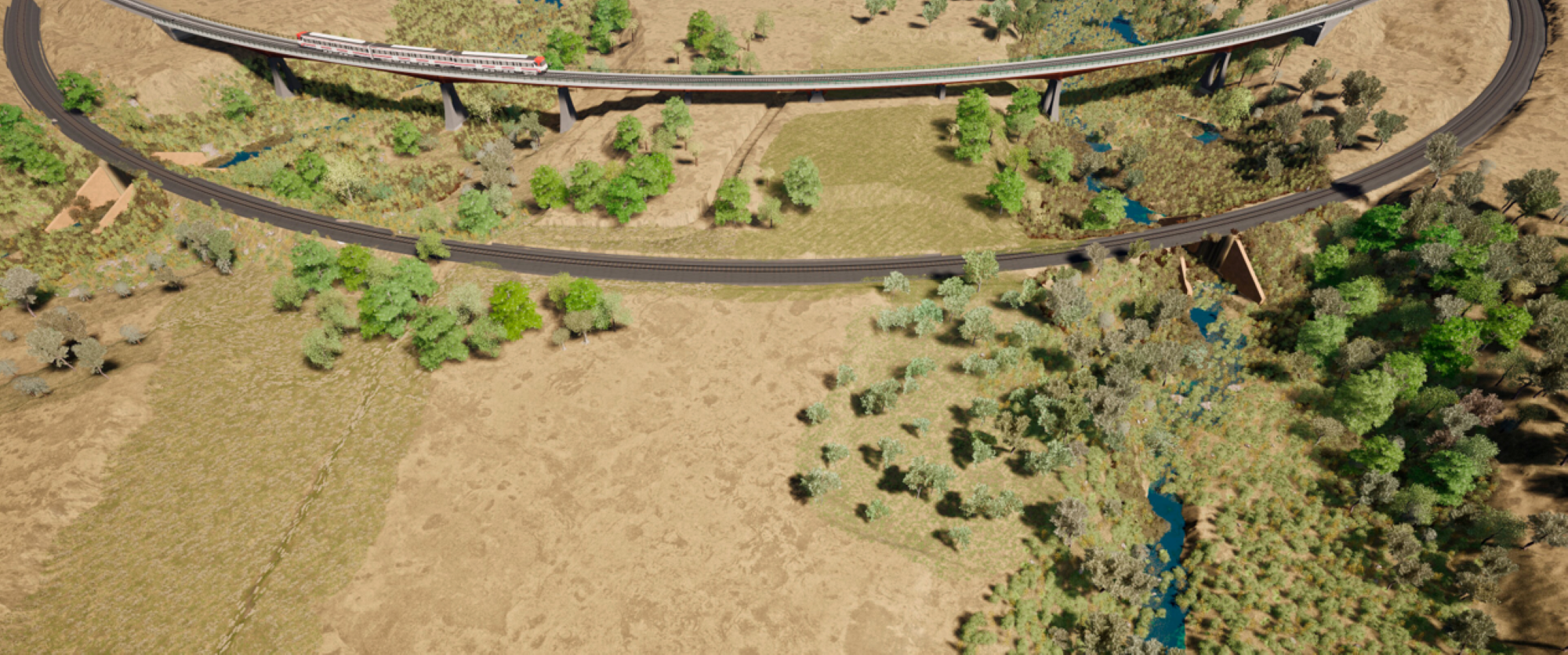
For the final solution, and considering that the current alignment has a radius of just under 300 m, it was decided to create an alternative alignment inside the current curve with a 350 m radius, slightly improving it without increasing its length. This new alignment lies within the Railway Protection Zone and maintains sufficient distance from the current route to carry out the works without affecting existing infrastructure, except in the tie-in or junction areas. Furthermore, it represents an improvement to the current section’s characteristics, increasing the maximum speed from 75 km/h to 85 km/h.
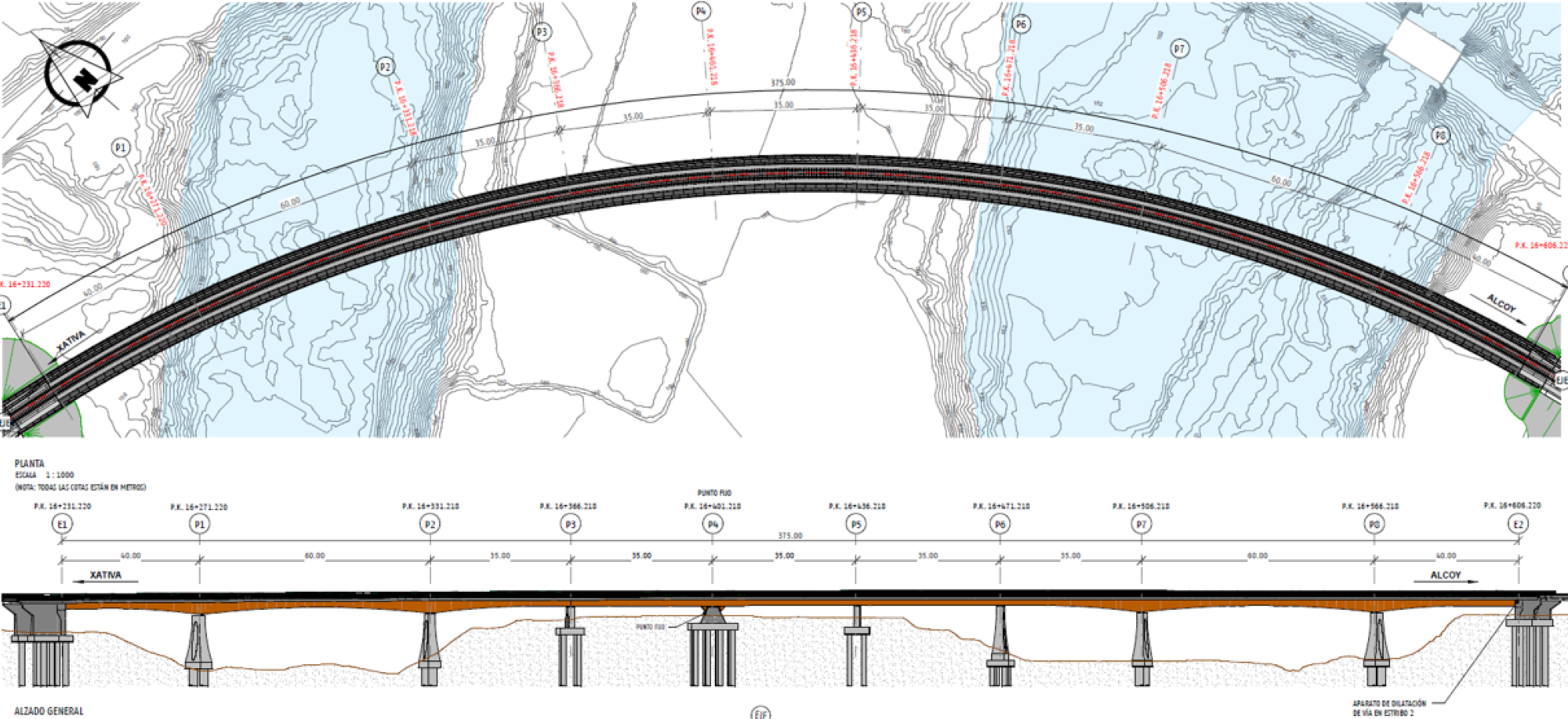
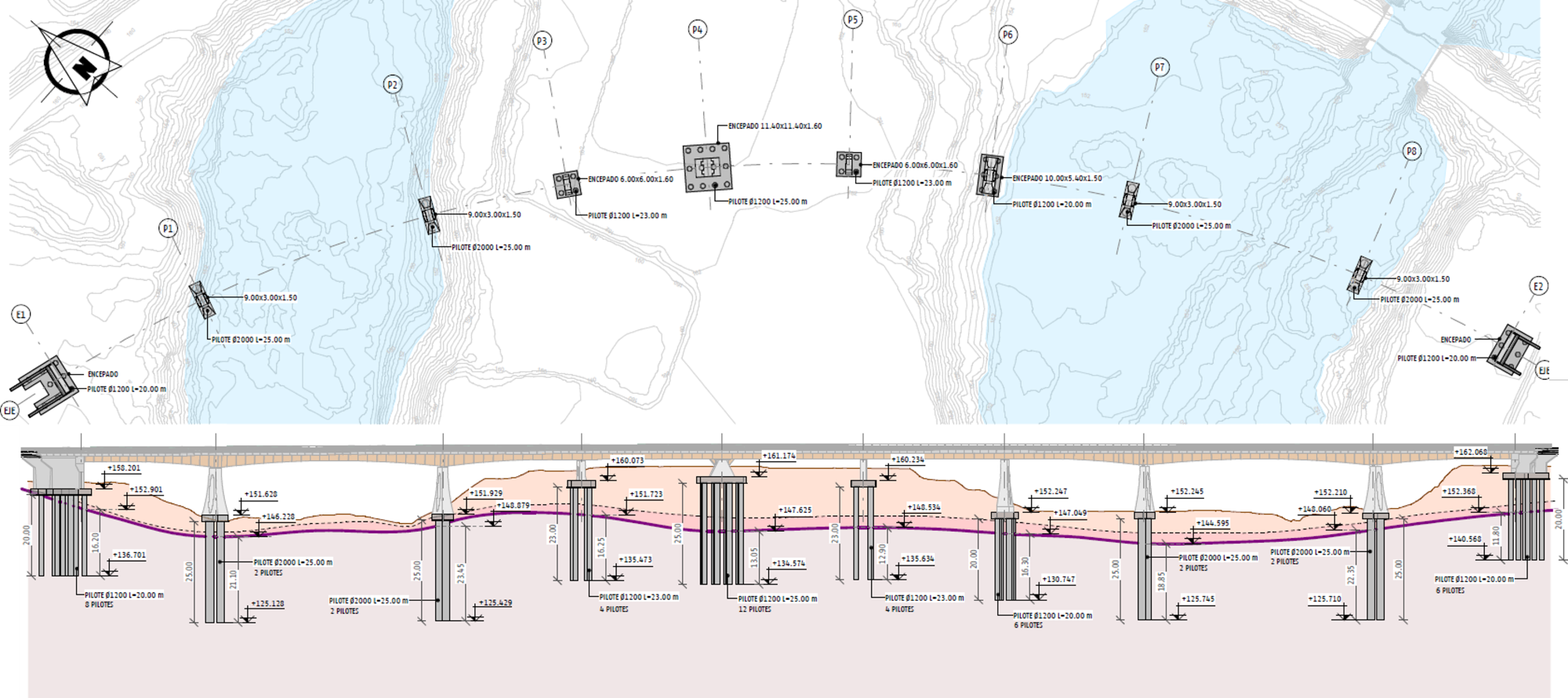
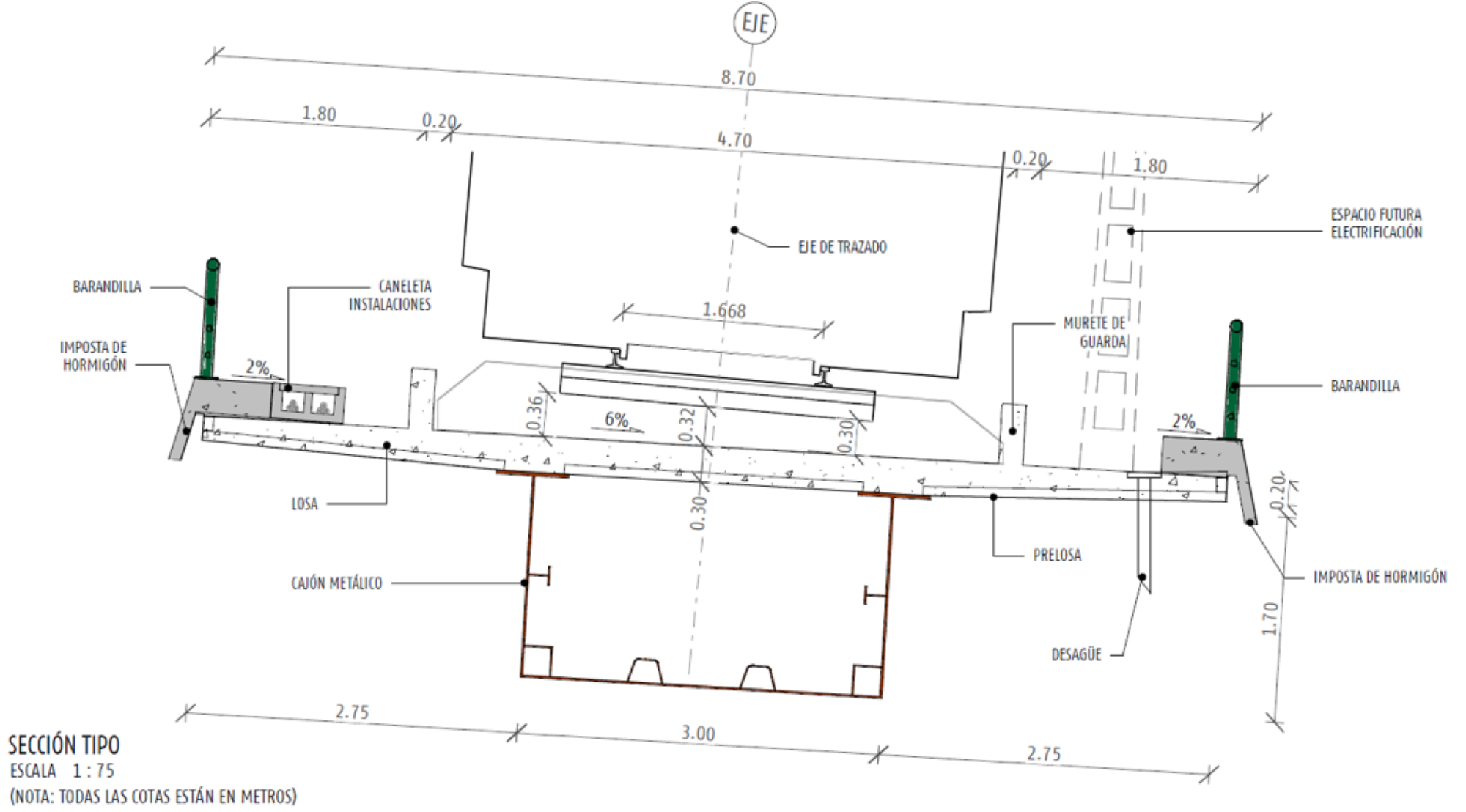
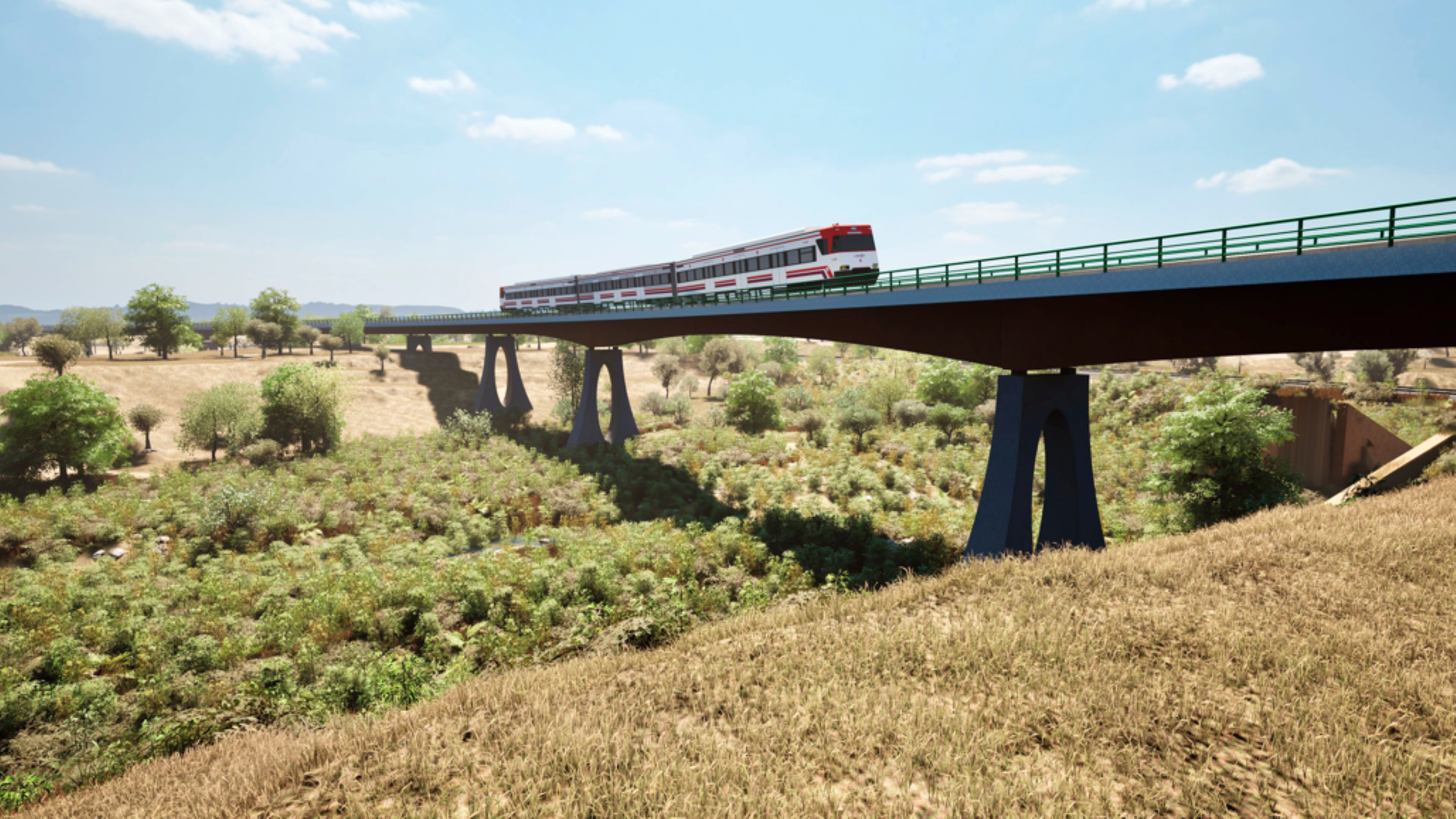
The new alignment is formed almost entirely by the proposed new viaduct, which has a length of 367 m, distributed in spans of 36 m + 60 m + 5 x 35 m + 60 m + 36 m. The cross-section consists of a deck width of 8.50 m, which accommodates the ballasted track, the potential future electrification of the line, the passage of installations, and a walkway for maintenance work.
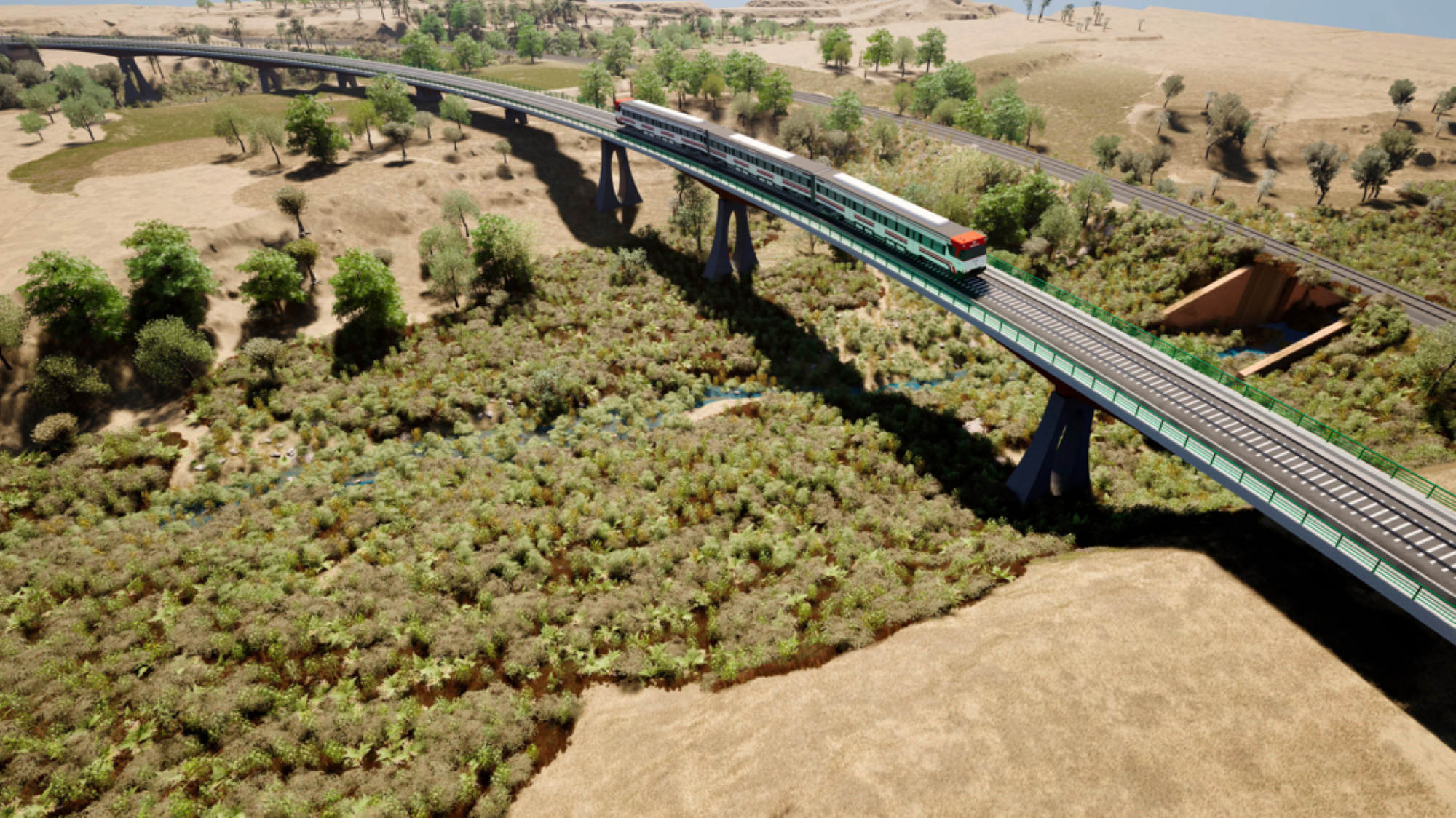
Finally, the structural proposal is a composite viaduct consisting of a steel box girder with variable depth to better adapt to the span variation, a concrete top slab, and a bottom slab also on supports to take advantage of the double composite action. This solution allows for the prefabrication of the entire steel box girder in the workshop, followed by transport to the site in segments and placement using cranes. This significantly reduces site occupancy, terrain impacts, and the use of auxiliary equipment or machinery. This helps to reduce overall impact on watercourses and the environment. Regarding the future maintenance of the structure, it is proposed to be made of weathering steel (Corten), which performs well in these types of environments and eliminates the need for repainting.
To provide the best experiences, we use technologies like cookies to store and/or access device information. Consenting to these technologies will allow us to process data such as browsing behavior or unique IDs on this site. Not consenting or withdrawing consent, may adversely affect certain features and functions.