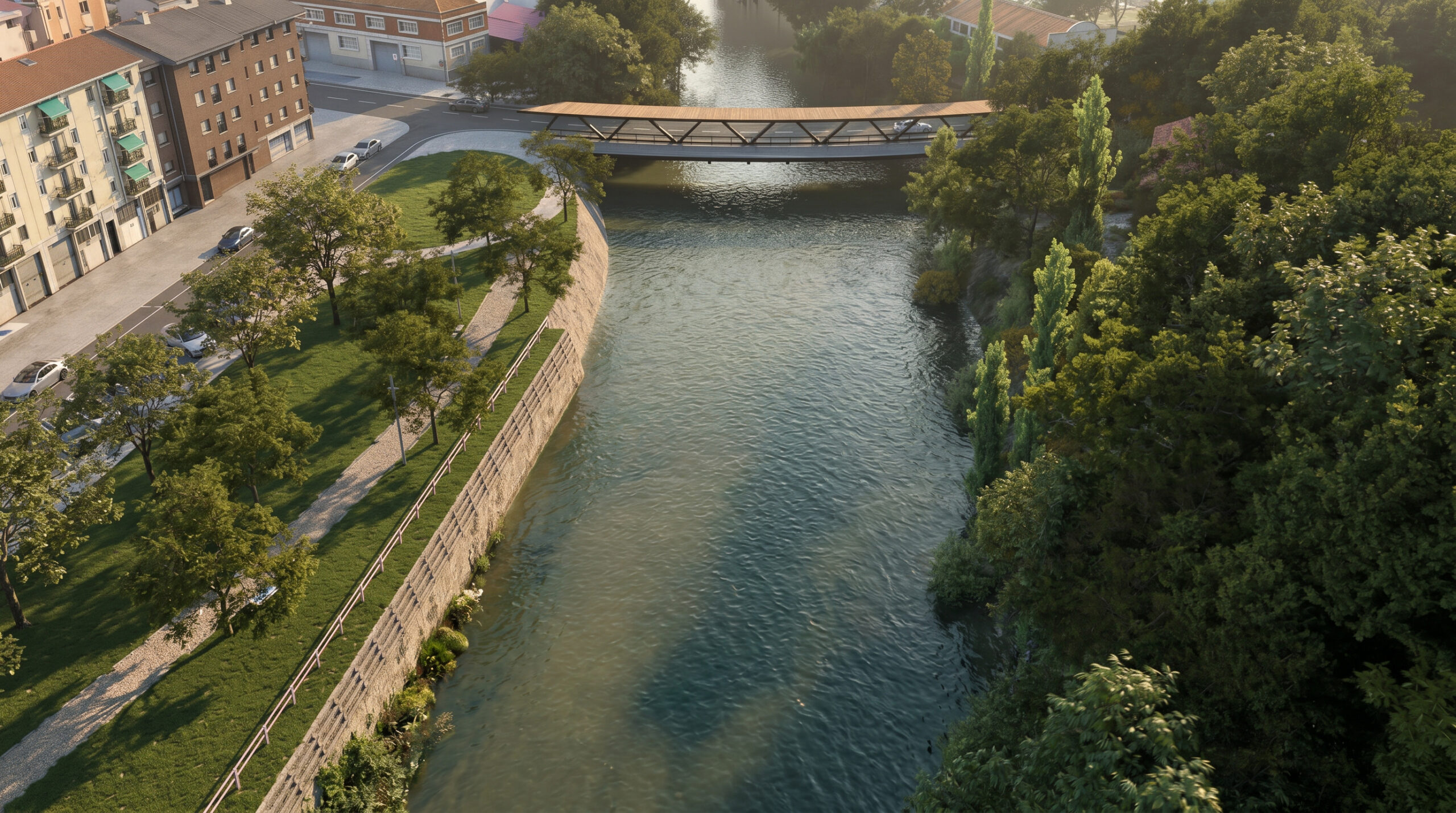
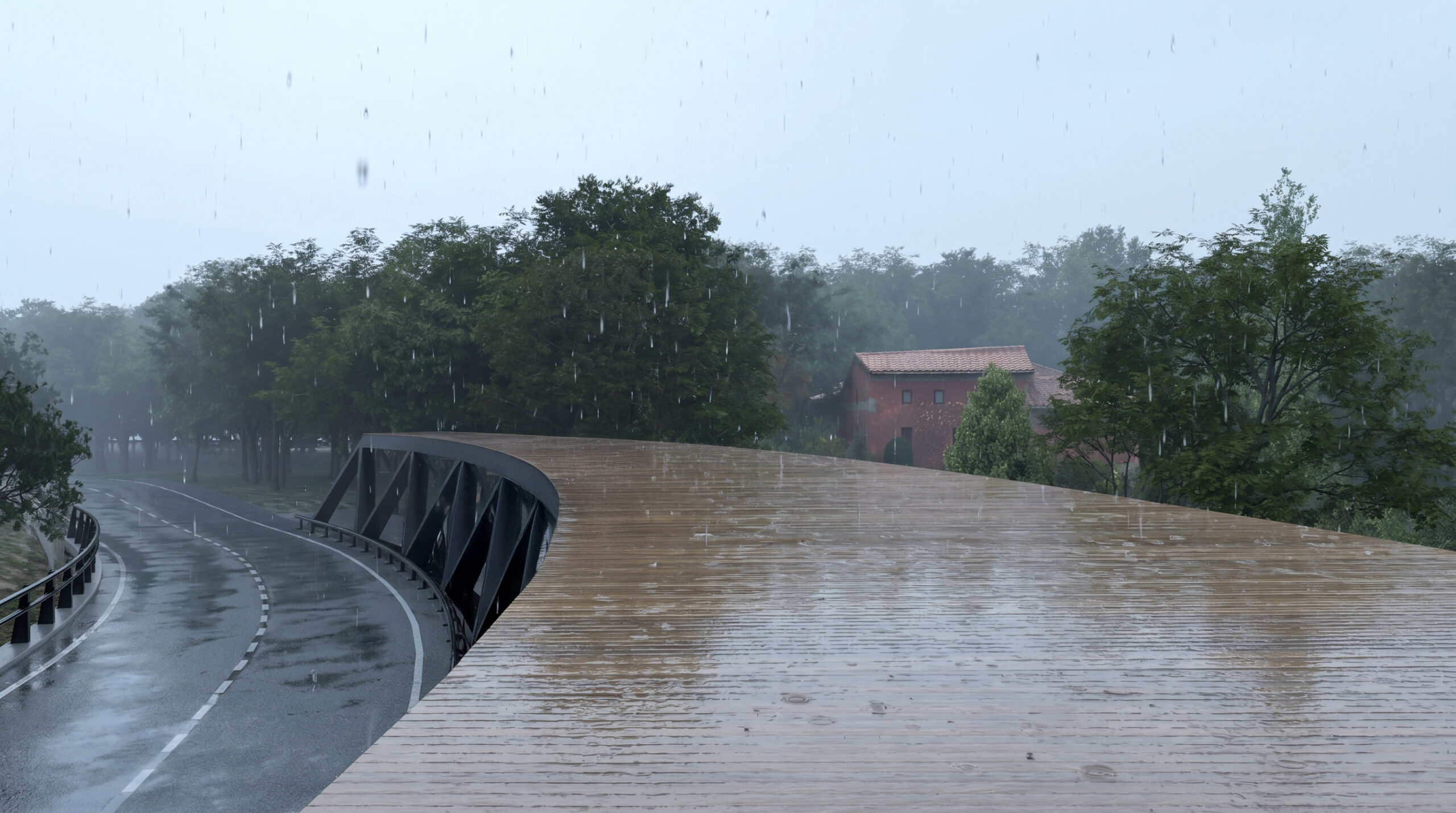
The Ultzama River, which originates near the Belate Pass in northern Navarre, flows through the town of Villava/Atarrabia in its final stretch just before joining the Arga River. The river’s fluvial dynamics in this section are characterized by a notable tendency to experience significant flooding during rainy seasons, causing recurrent overflows that affect Villava. These overflows are substantial, particularly in the area of the San Andrés bridge, which is considered a critical flood point.
Due to these issues, the Villava City Council signed an agreement with the Government of Navarre in August 2024 to replace the old bridge and build a new one designed to prevent such overflows.
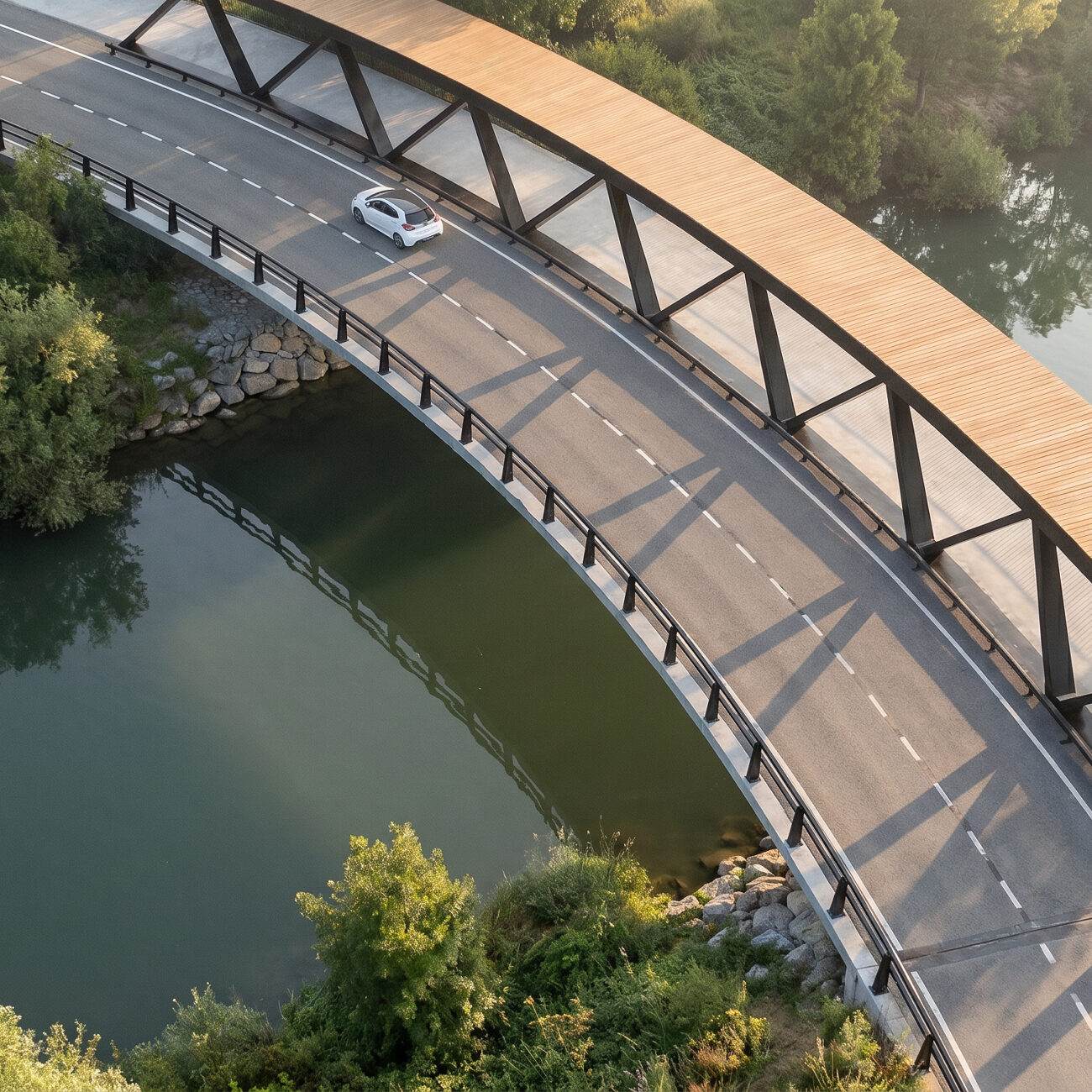
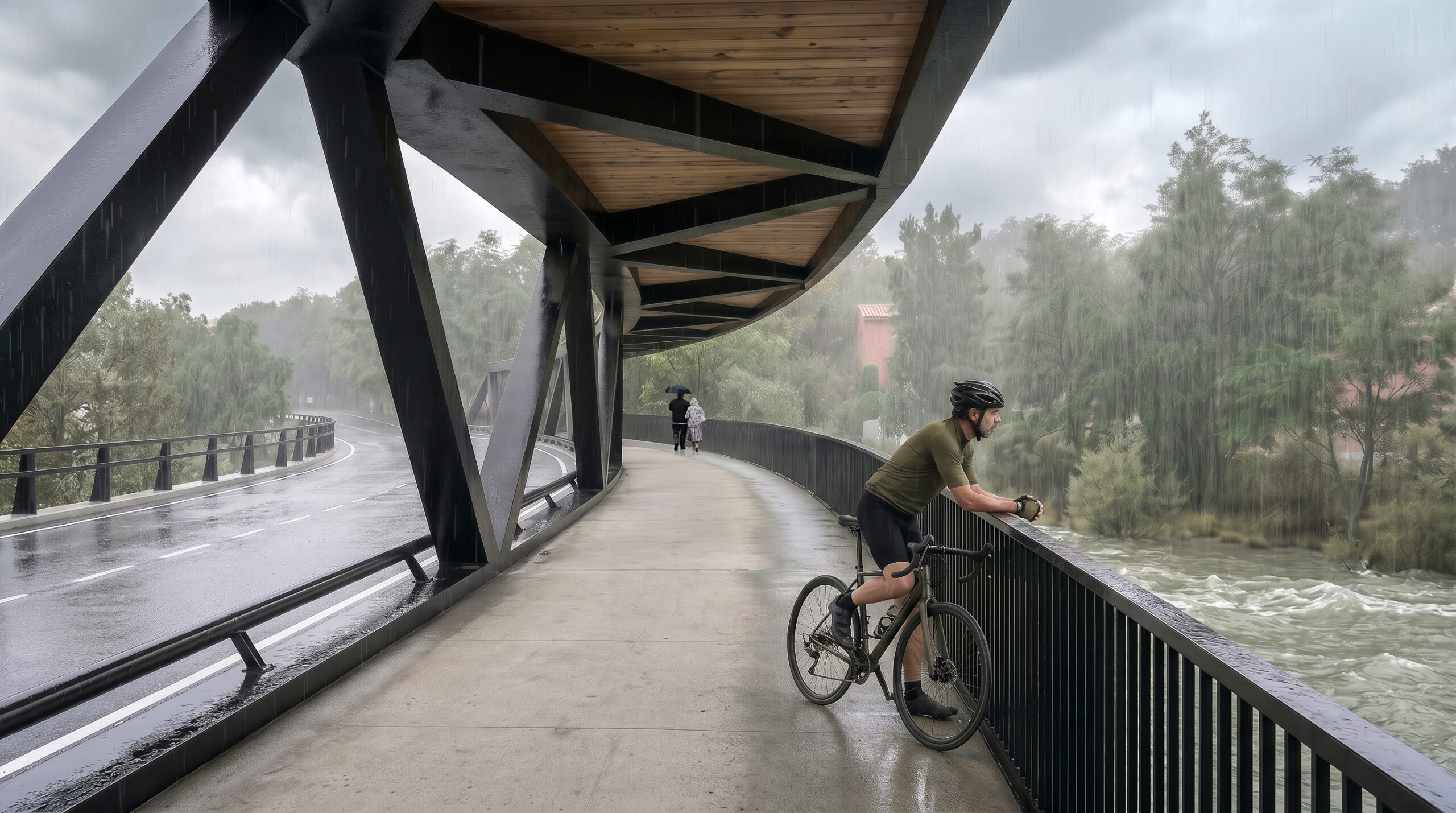
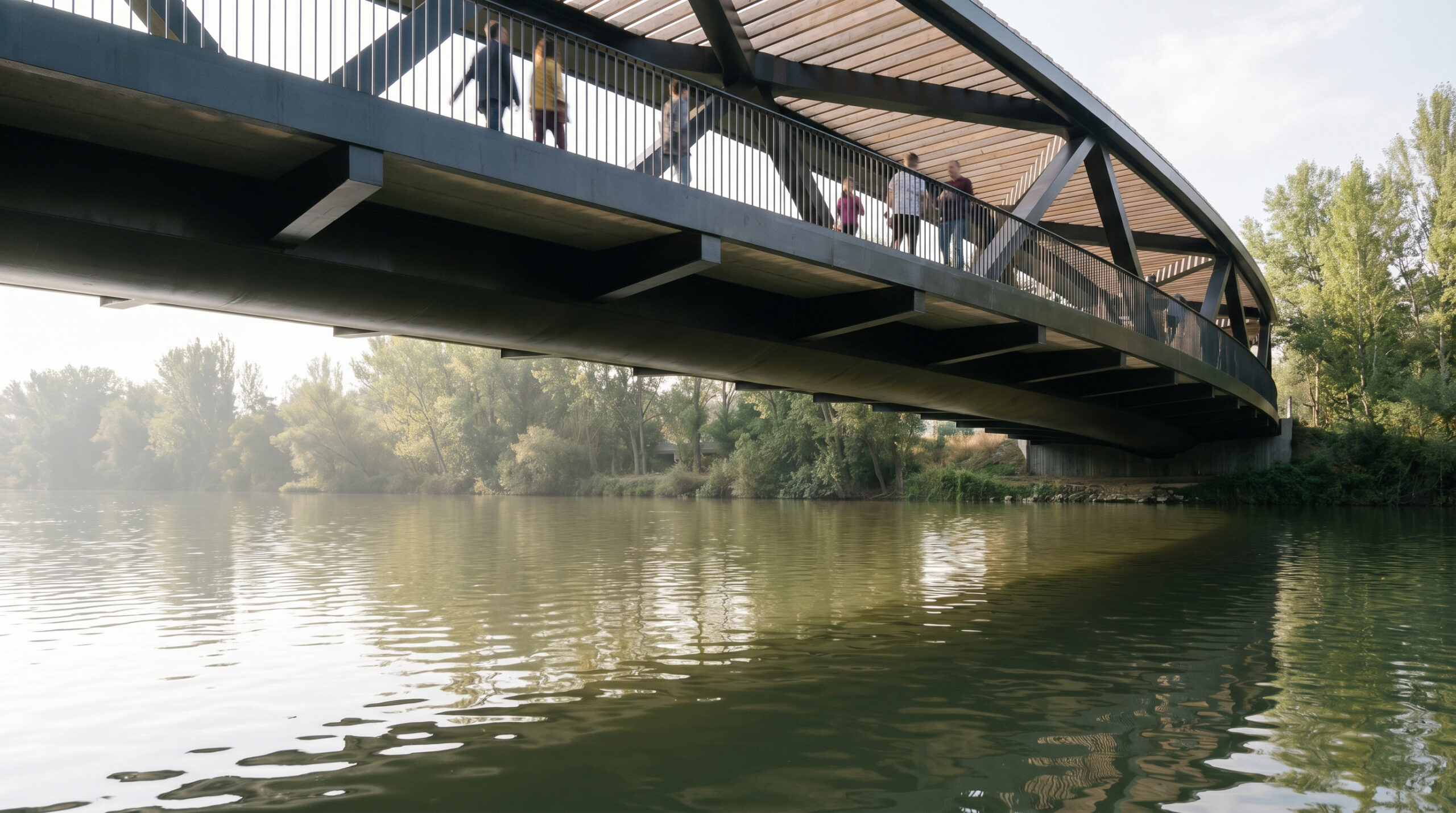
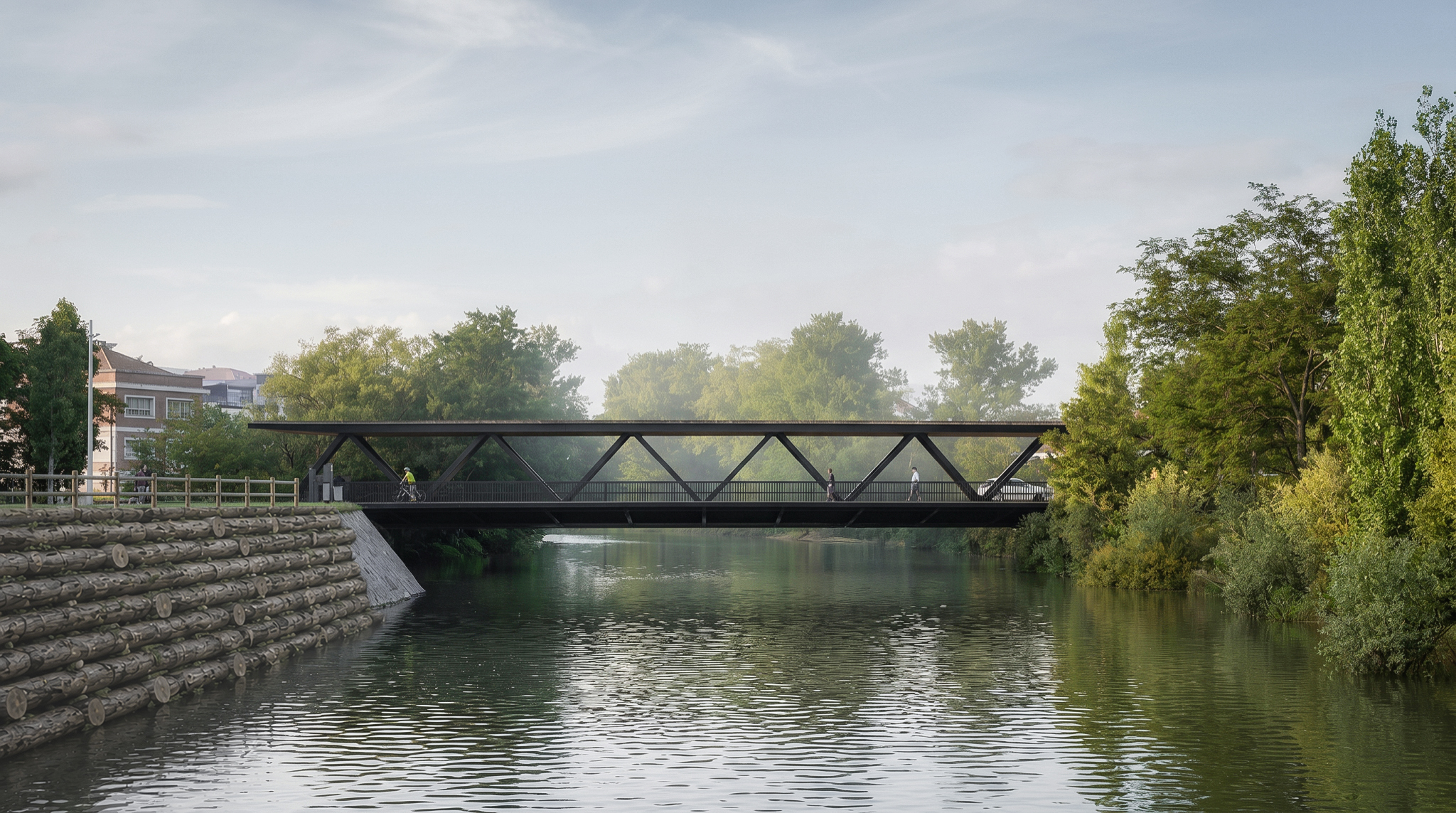
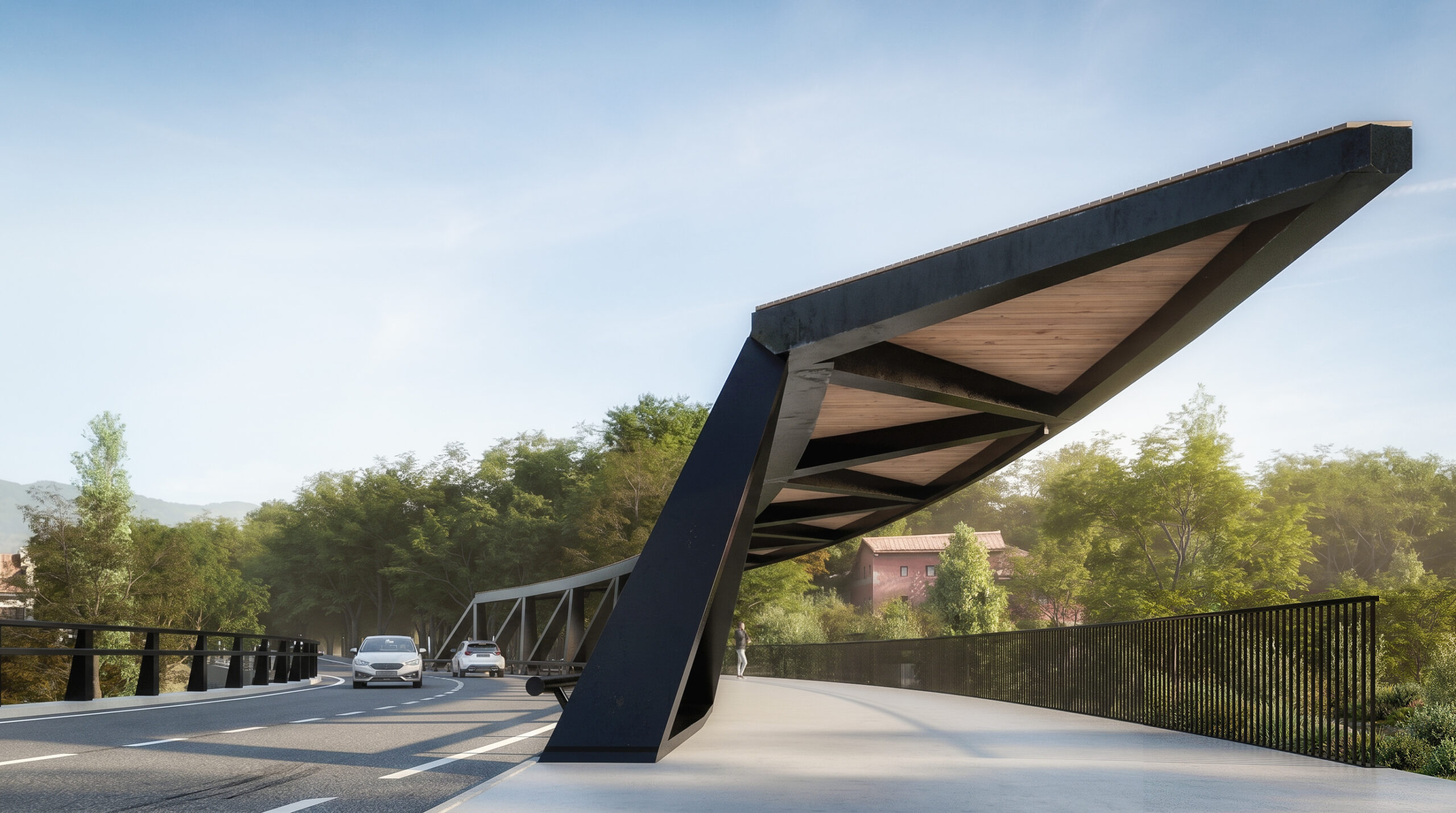
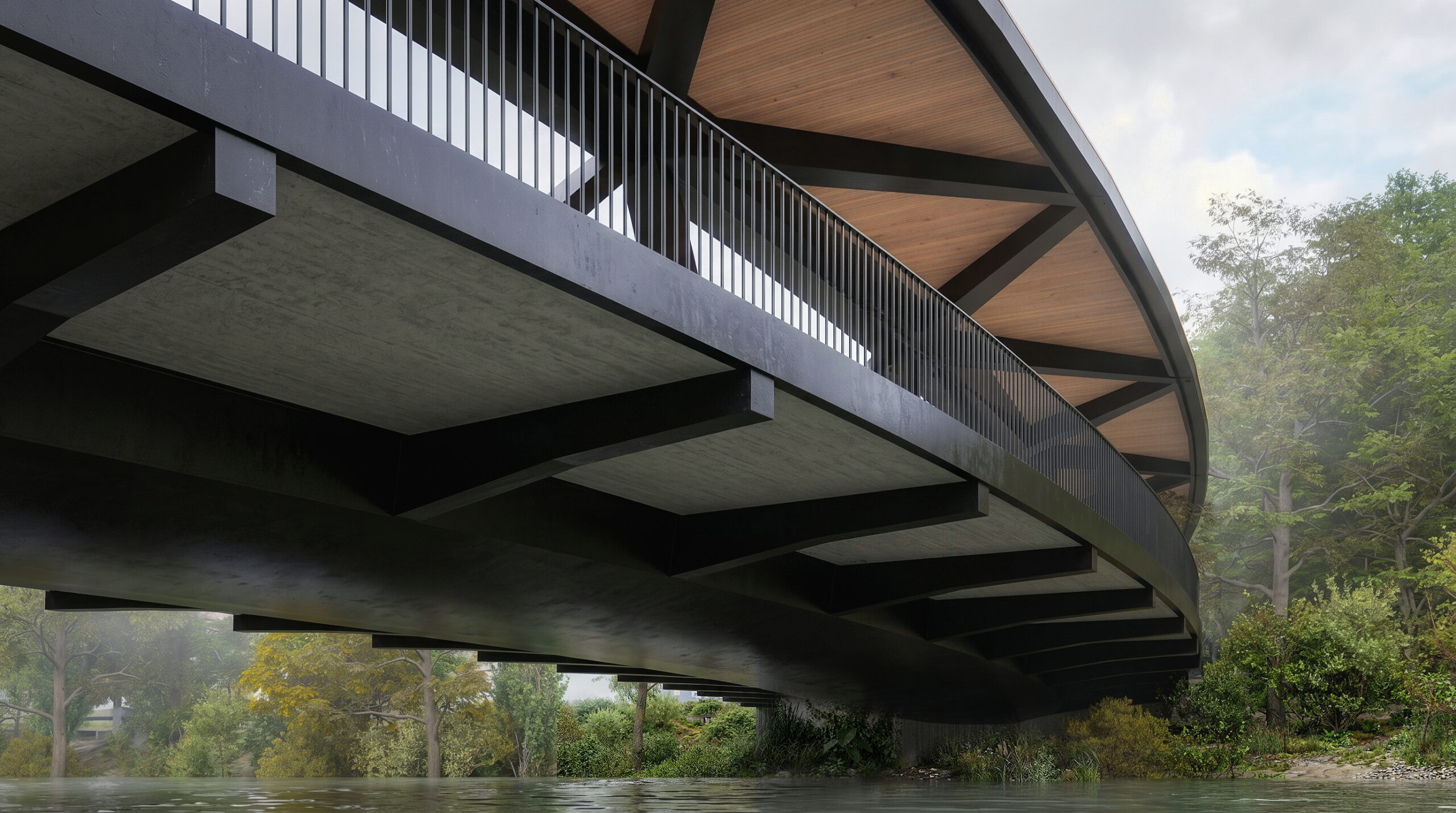
After a study of potential solutions, it was decided to develop a constant-depth lattice bridge with a broken section, which effectively addresses the structural constraints imposed by the torsion generated by the bridge’s horizontal curvature. This steel structure solution allows for rapid factory fabrication and quick assembly at the final site. This significantly reduces the closure time of the current bridge, minimizing inconvenience to users and disruptions to daily activity in the affected area. Furthermore, this solution provides more space for pedestrians, as well as a canopy that improves protection against sun and rain, making it a more comfortable and attractive option for pedestrian transit. The project is completed with the development of a river park on one of the riverbanks.
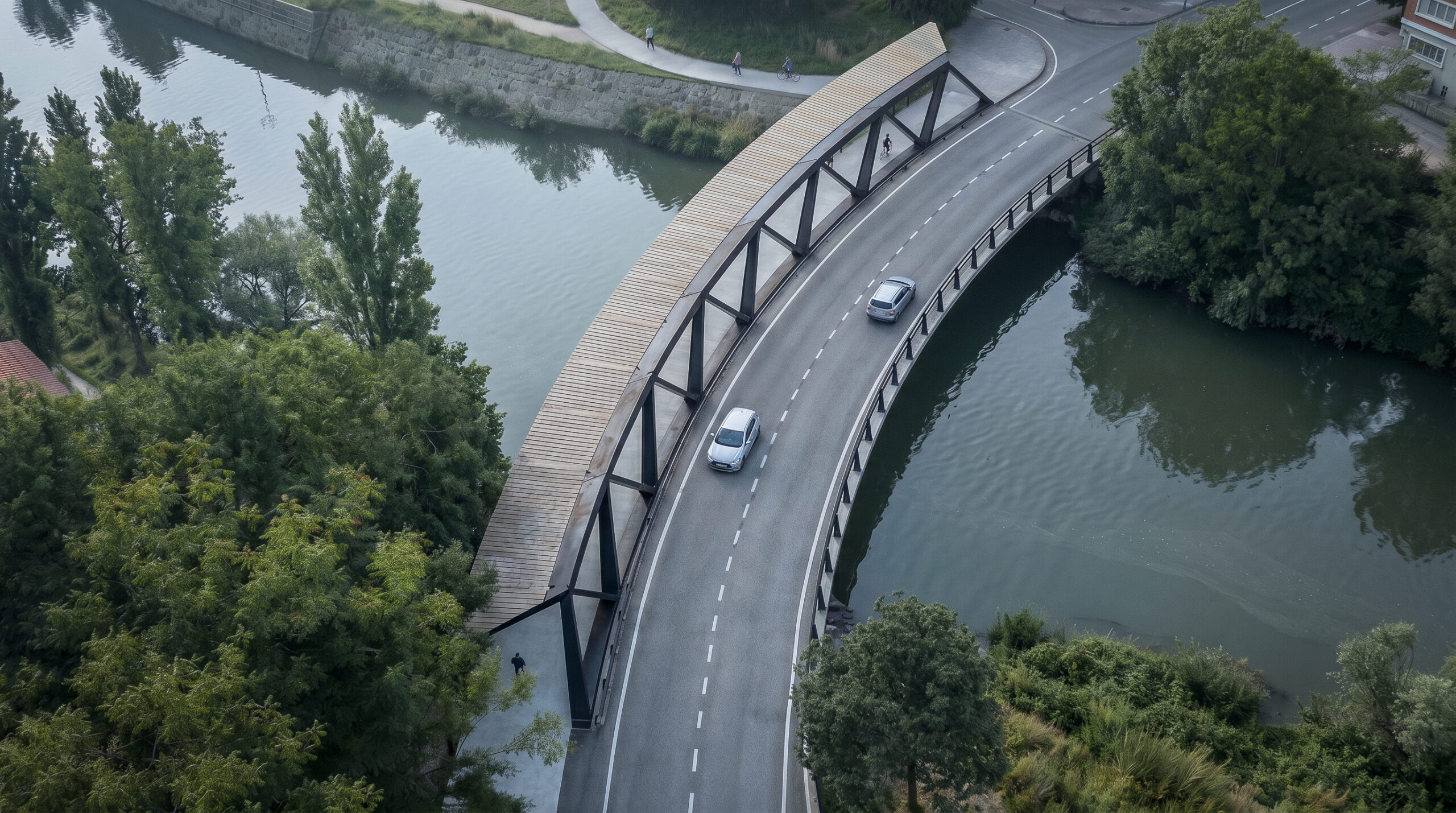
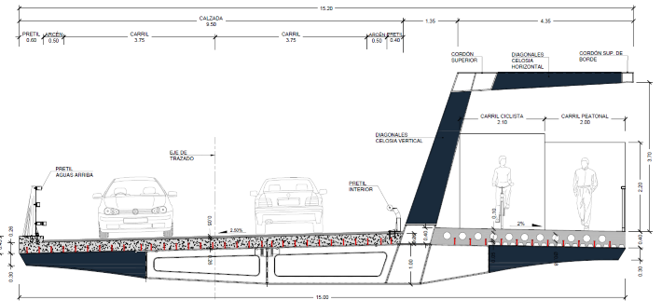
The bridge features a single lattice that follows the curvature of the deck in the plan, separating the pedestrian walkway and bike lane from the traffic lanes. To address the significant torsional loads arising from the curvature and off-center loading, the design features a bend in the main lattice into an upper horizontal lattice, which also doubles as a canopy for the pedestrian walkway. Both lattices are complemented by the bridge deck lattice, forming a “Z”-shaped section that provides the deck with notable torsional resistance.
The vertical lattice is the bridge’s primary load-bearing element. This is a Warren-type lattice, responsible for absorbing all loads acting on the deck and transferring them to the abutment stiffeners using the stress distribution scheme typical of this type of lattice (the top chord is primarily subject to axial compression, the bottom chord is subject to tension, and the diagonal members are subject to varying axial forces that distribute the loads toward the supports).
Tu privacidad es importante
Nosotros y nuestros partners usamos cookies para personalizar el contenido y pueden recopilar información no confidencial. Para más información visita las Condiciones de uso.