
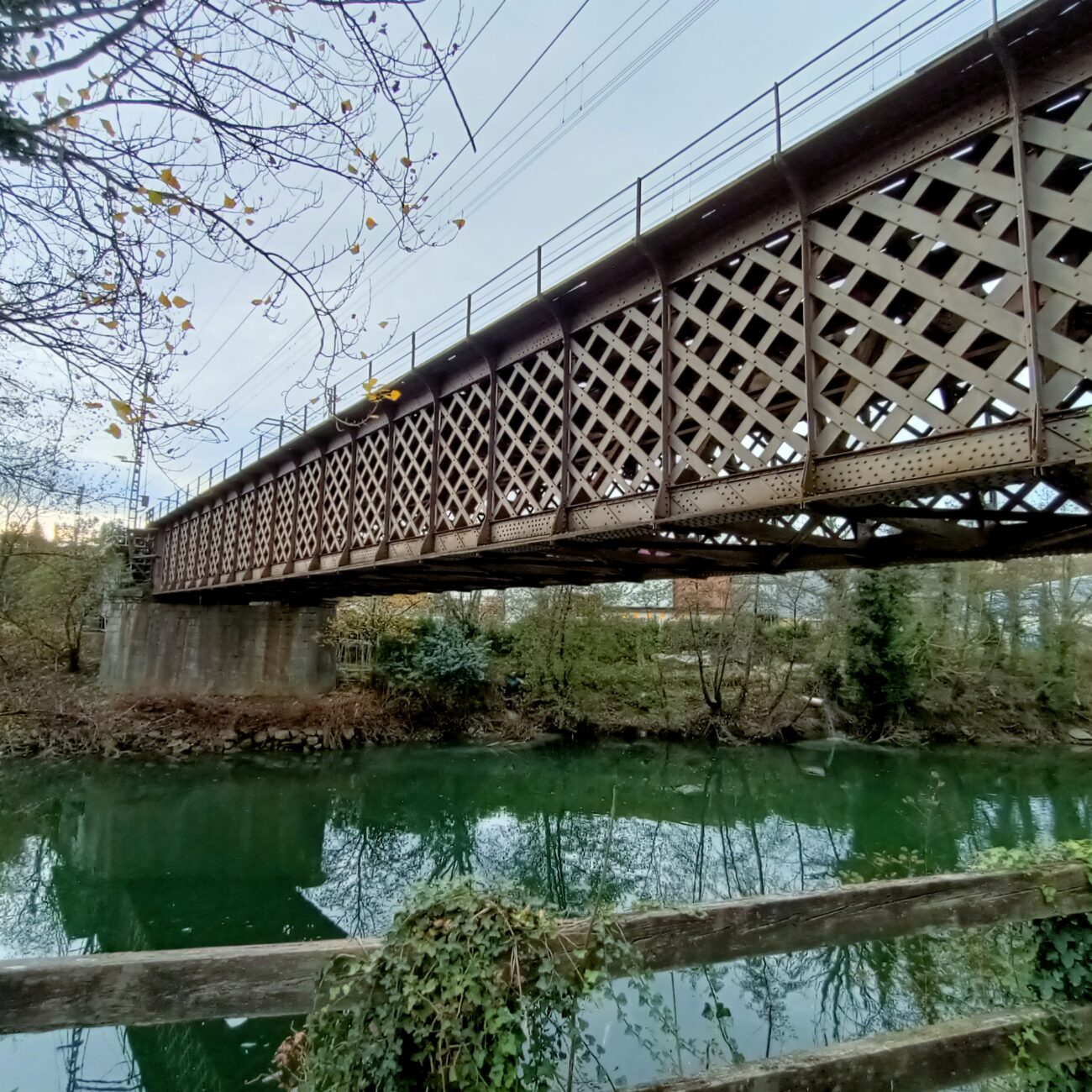
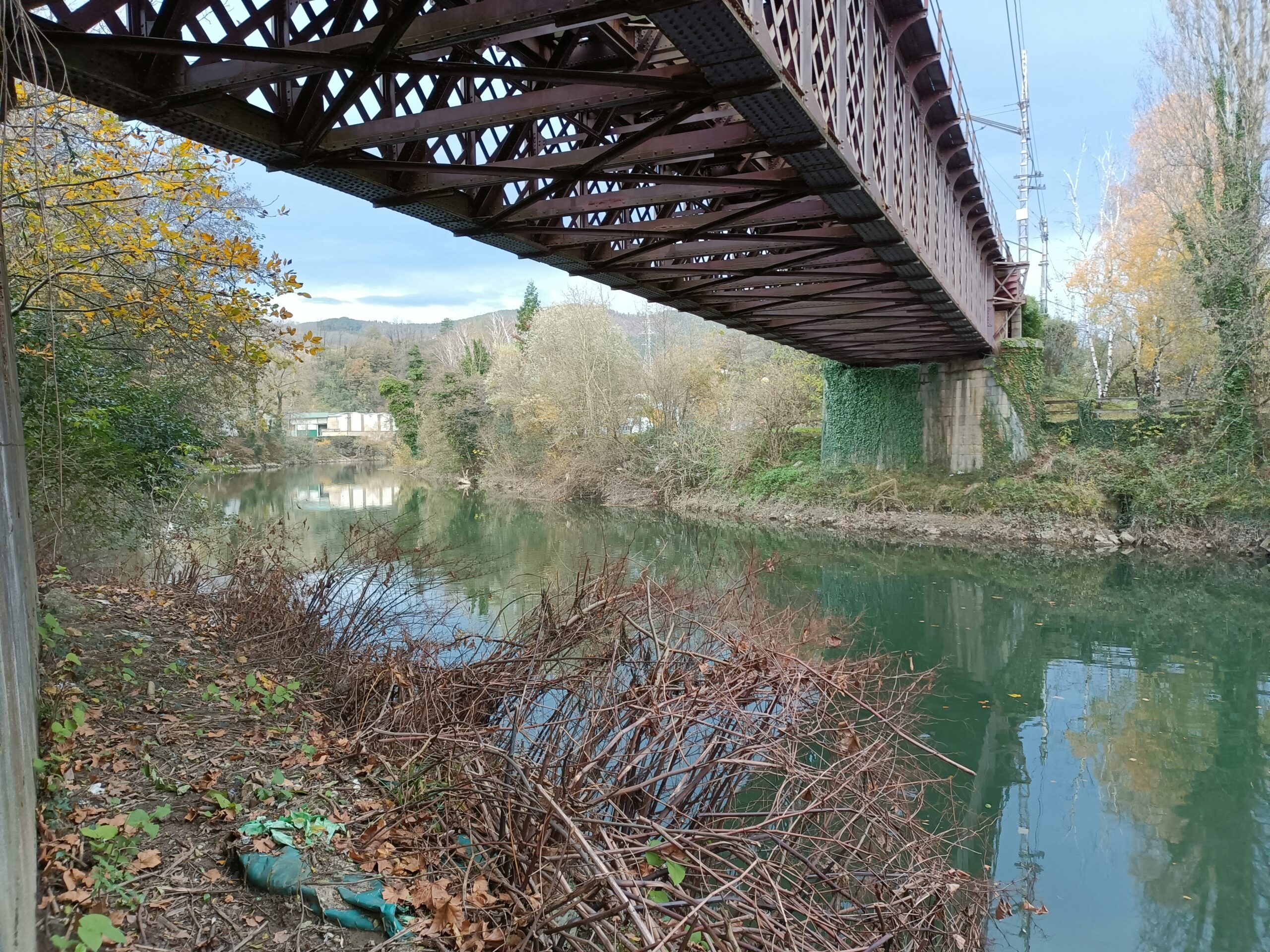
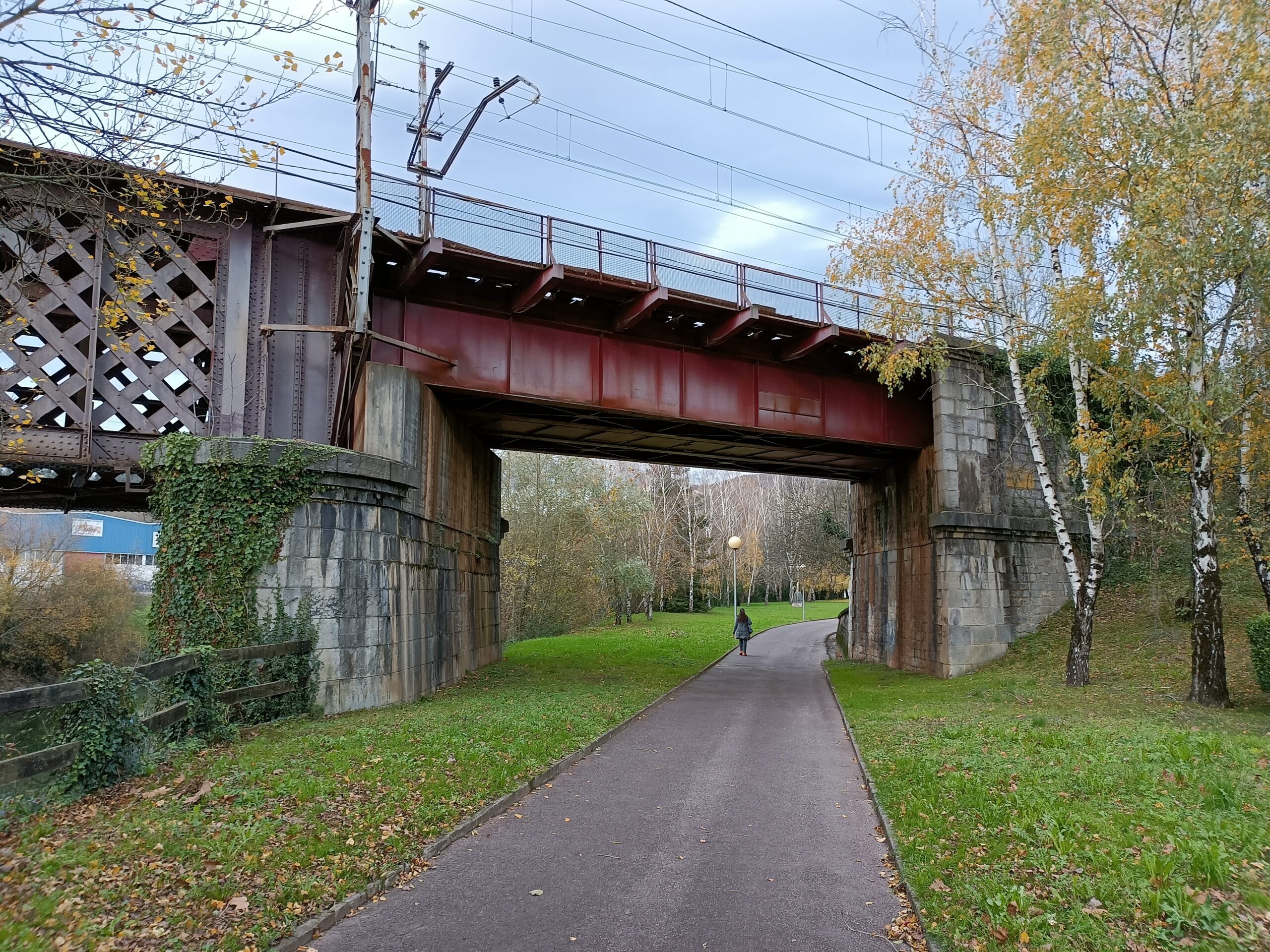
The Madrid–Hendaye railway line features a landmark bridge where it crosses the Oria River between the municipalities of Zizurkil and Villabona (Gipuzkoa), as it still preserves one of the last original decks made up of fifth-order puddled iron lattice girders.
However, this unique typology recurrently gives rise to a series of defects associated both with poor durability and with structural problems mainly caused by fatigue. These defects have been corrected throughout its service life through various repair projects, but they continue to reappear over time and are especially concerning in a bridge made of puddled iron, a material who’s mechanical and durability performance is inferior to that of modern steels, showing in particular high brittleness and lower structural resistance.
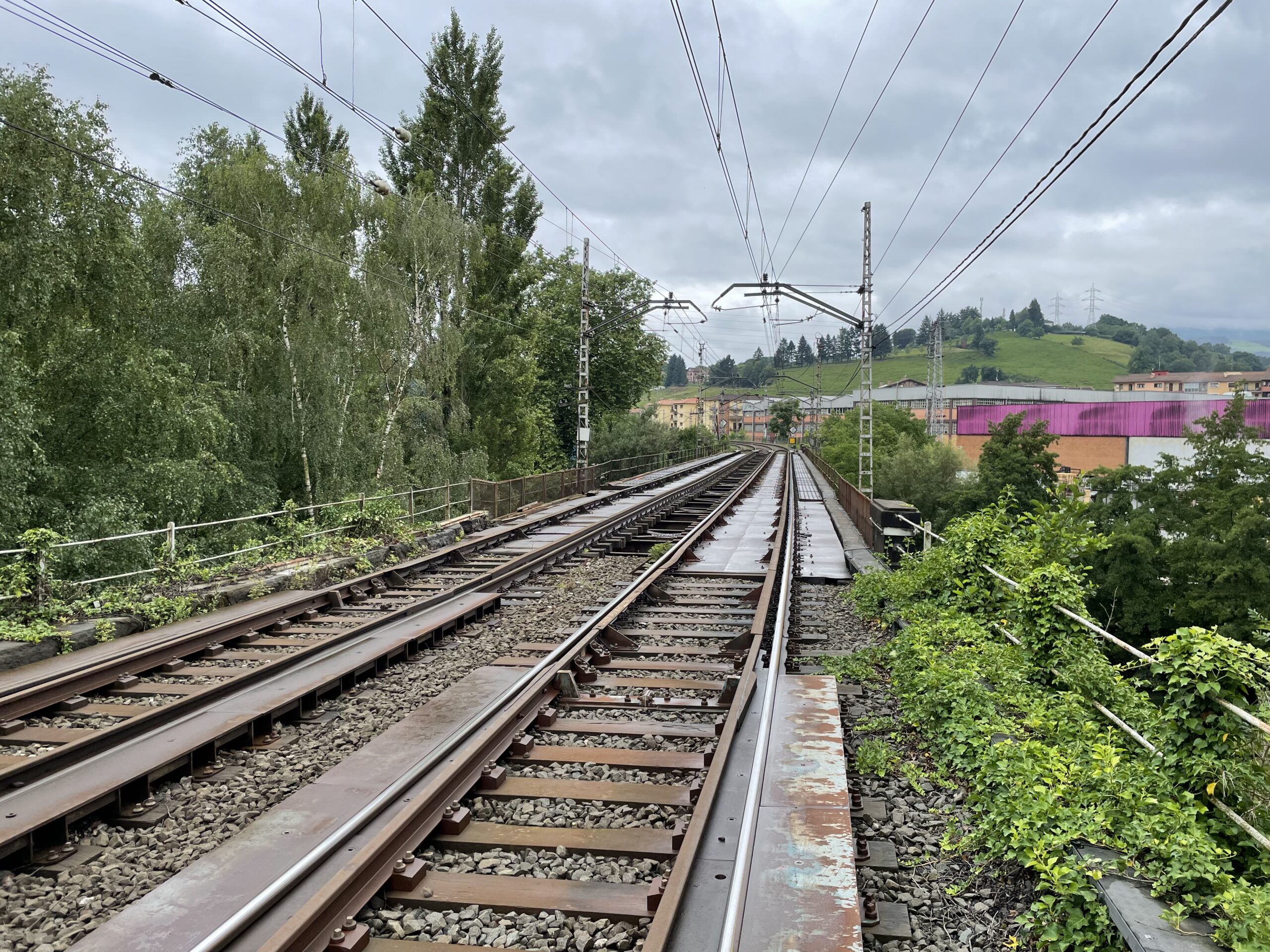
Although the latest repair and strengthening works on the bridge were carried out in 2022, with INES participating as technical assistance, and these works increased the bridge’s capacity and durability, the structure has been in service for more than 160 years, far exceeding its intended design life. This age implies a reduction in its resistance to fatigue phenomena, compounded by the fact that its typology (a straight steel deck without ballast) makes it a straight alignment in plan and a fixed point in the vertical profile, meaning that its integration into the line constrains the alignment and creates maintenance issues. All of this has made it necessary to decide on an alternative to the existing bridge.
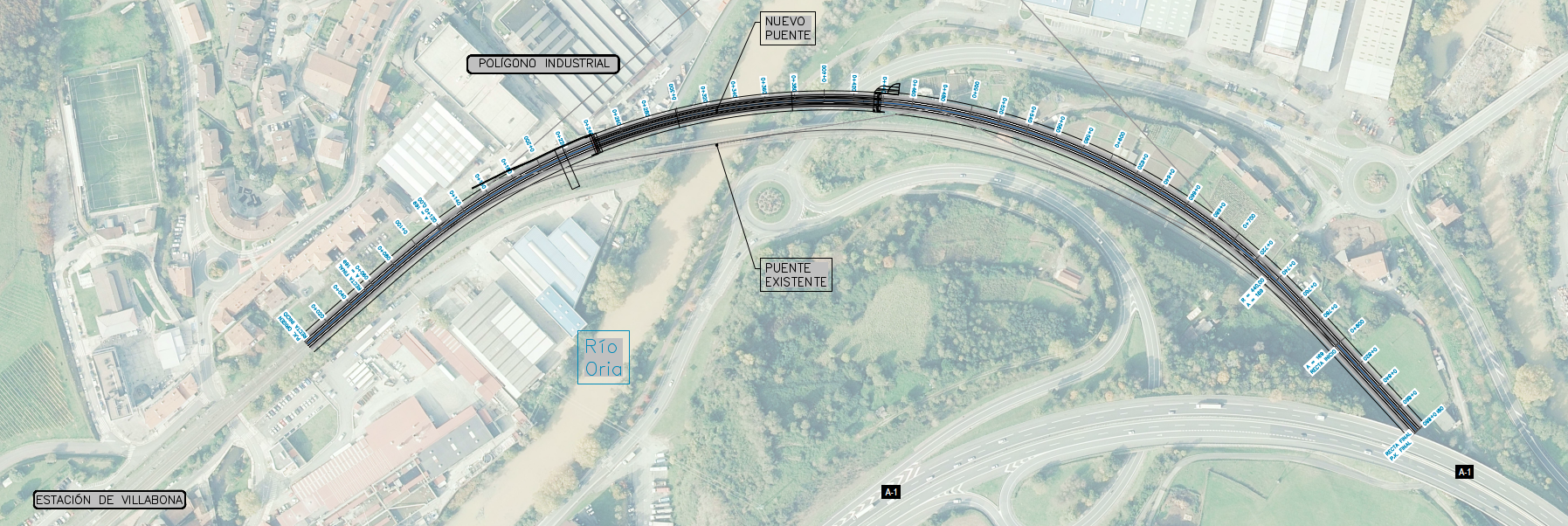
Based on this premise, several options were studied for crossing Line 100 over the Oria River, evaluating the possibility of replacing the bridge in the same location or alternatively modifying the alignment. Despite the complexity of its location in an urban and industrial area, the chosen solution was to slightly modify the alignment in order to divert traffic away from the current bridge and allow for minimal disruption to railway operations on a heavily trafficked line. The solution consists of a single curved alignment with a larger radius outside the current route, which simplifies the alignment and improves future maintenance of the line.
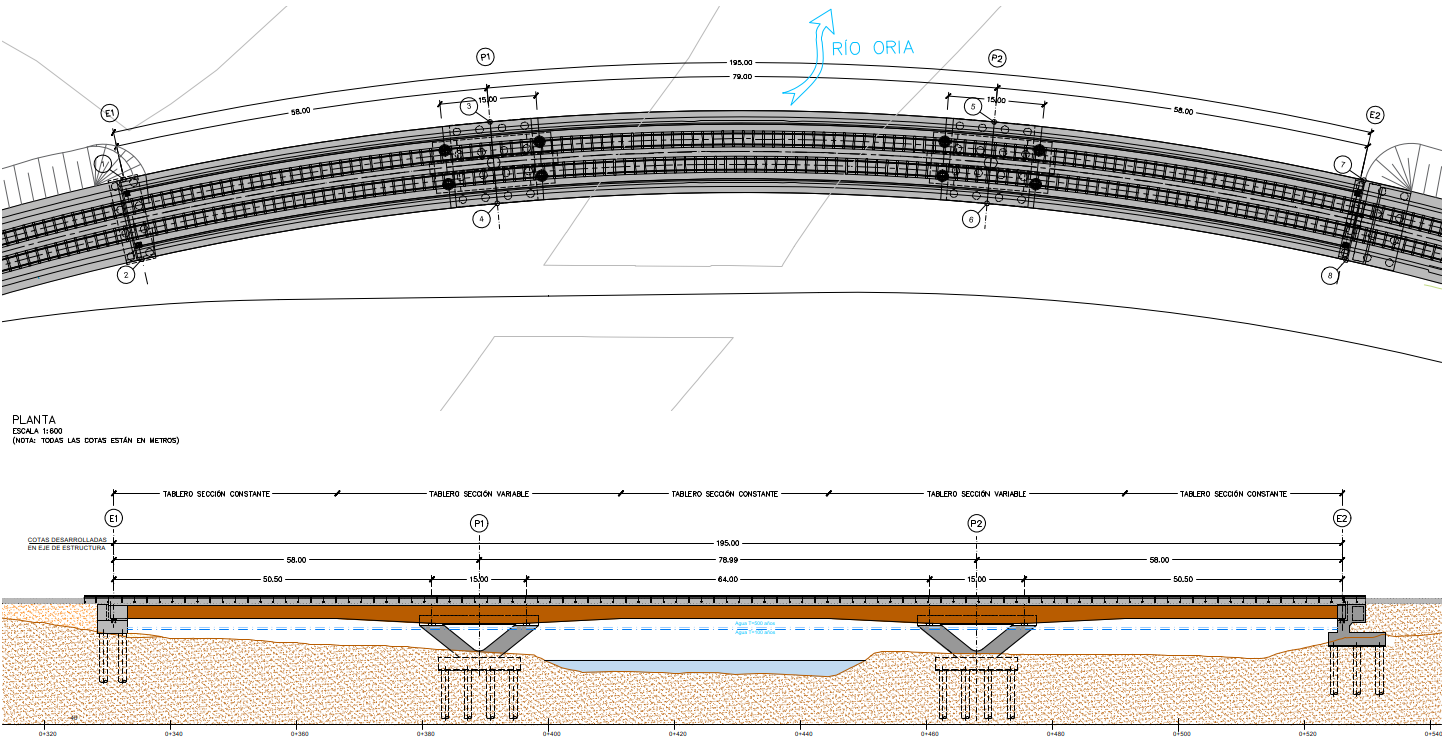
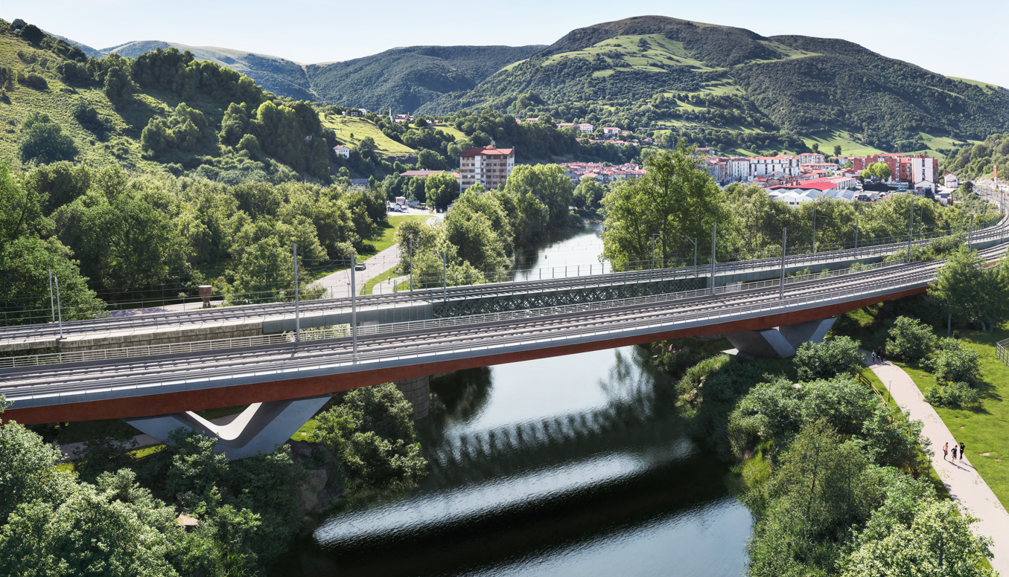
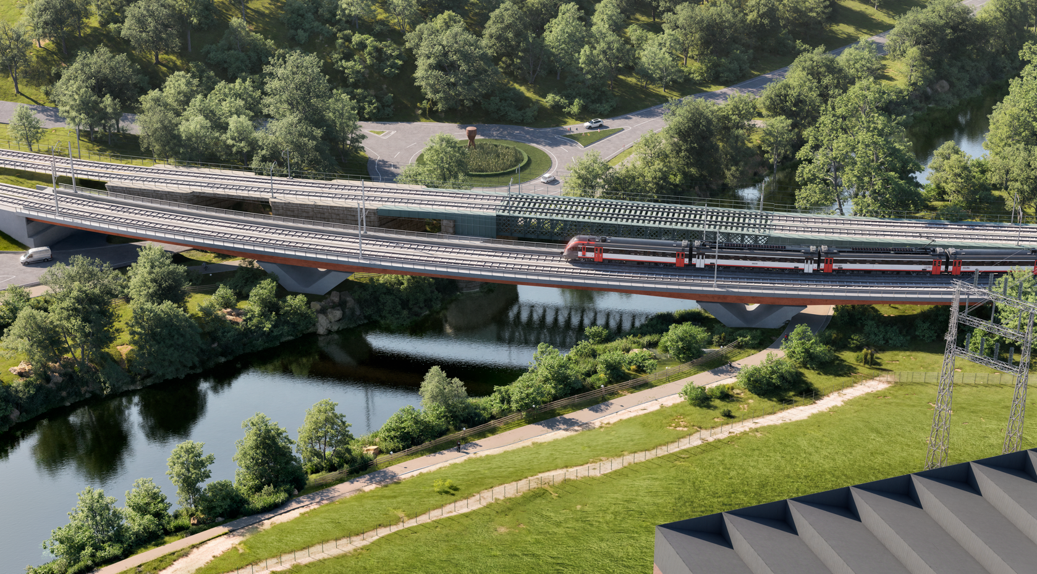
The new alignment requires a new bridge to cross the Oria River downstream from the existing one. The distance between the new bridge and the existing structure reaches nearly 10 m, making it possible to build the river bridge works without affecting rail traffic and without relying on maintenance windows. A bridge with a span arrangement of 58+79+58 is proposed to cross the Oria River without requiring a pier in the riverbed. To reduce the effective span of the central bay, V-shaped piers are defined, leaving the central span between supports at 64 m. This span arrangement also allows the crossing over the existing road and the cycle path on both sides of the river.
For the deck, a composite solution is proposed with a double steel box girder supporting a concrete slab. This typology makes it possible to reduce the weight of the structure and thereby facilitate erection while also reducing the scale of cranes and auxiliary resources required. It also helps reduce the potential environmental impact on the Oria River by decreasing the number of operations over the river and the volume of concrete works. To facilitate future maintenance of the structure, the box girder is proposed in weathering steel (Corten), while the piers are designed in concrete due to their proximity to the Oria River channel. A variable-depth section has been adopted, making it possible to comply with the depth limitation that ensures hydraulic clearance over the Oria River while also meeting the minimum clearance of 5.30 m above the existing road. To accommodate the double track, the deck would have a width of 12.80 m and a constant cant.
To provide the best experiences, we use technologies like cookies to store and/or access device information. Consenting to these technologies will allow us to process data such as browsing behavior or unique IDs on this site. Not consenting or withdrawing consent, may adversely affect certain features and functions.