
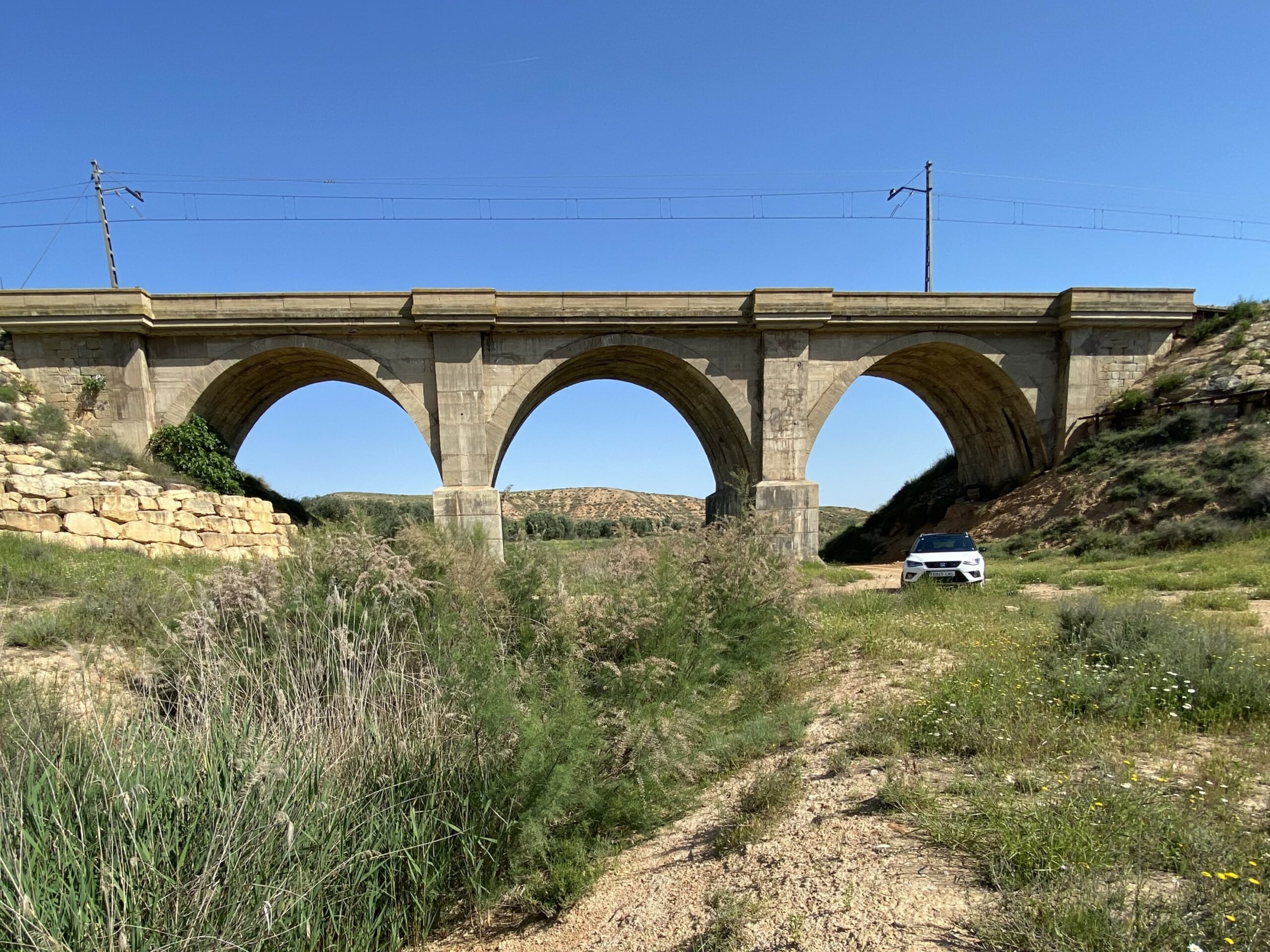
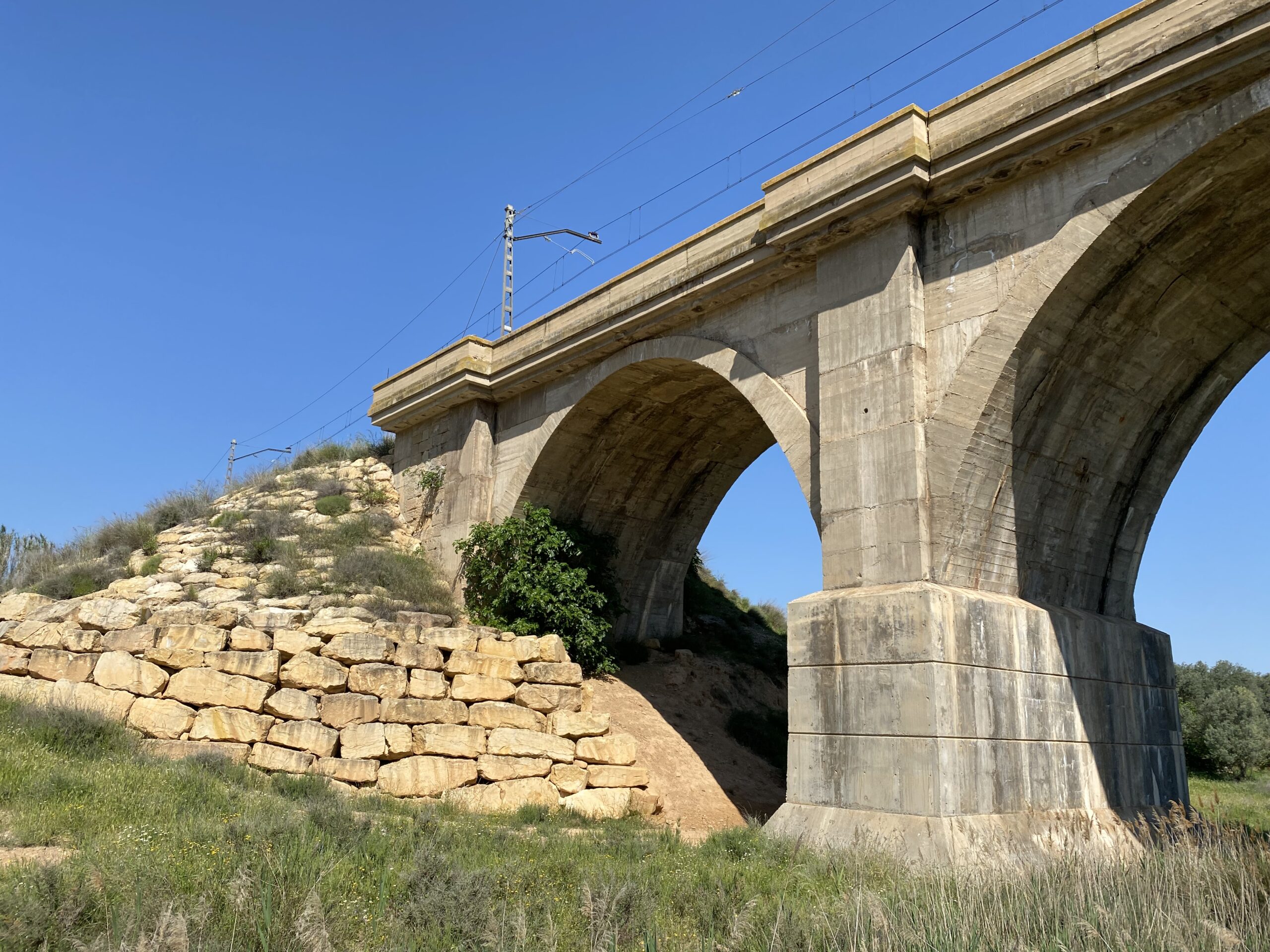
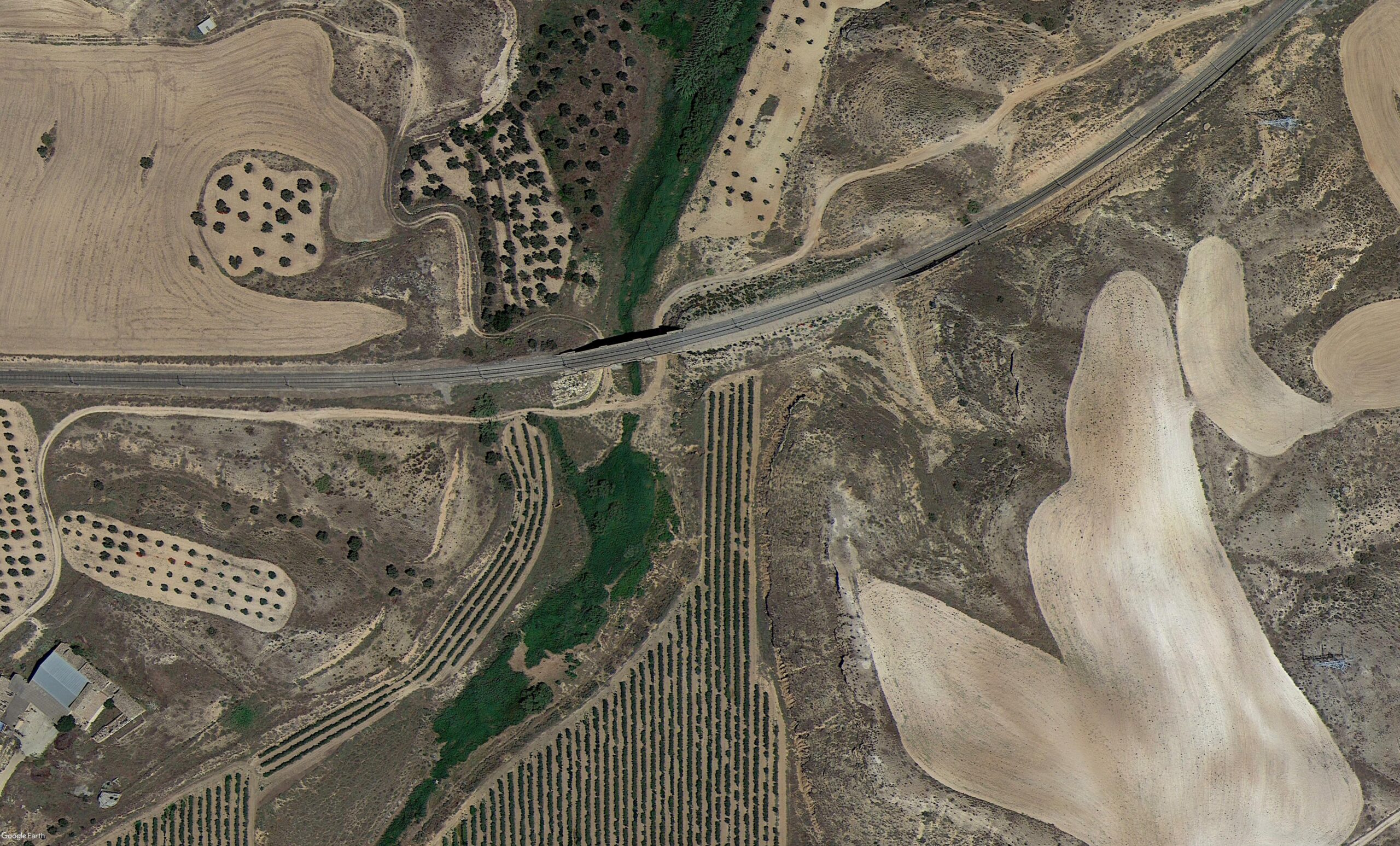
The Valderreguero bridge, located in the municipality of Samper de Calanda, carries railway line 210 Miraflores – Sant Vicenç de Calders over the Reguero valley and the Valimaña stream. It is a straight three-span structure with 13.50 m spans, formed by parabolic concrete arches with rigid reinforcement and variable depth, supported on two rectangular concrete piers.
The latest inspections have confirmed that the structure is in poor condition. Numerous defects caused by durability-related issues have been identified in all of its elements, resulting from the low quality of the original concrete and aggravated by chemical attack due to the presence of gypsum and sulphates in the ground.
Given the structural deterioration detected and the risks it poses to the functionality and safety of the platform, it has been concluded that the bridge has reached the end of its service life, making its replacement necessary.
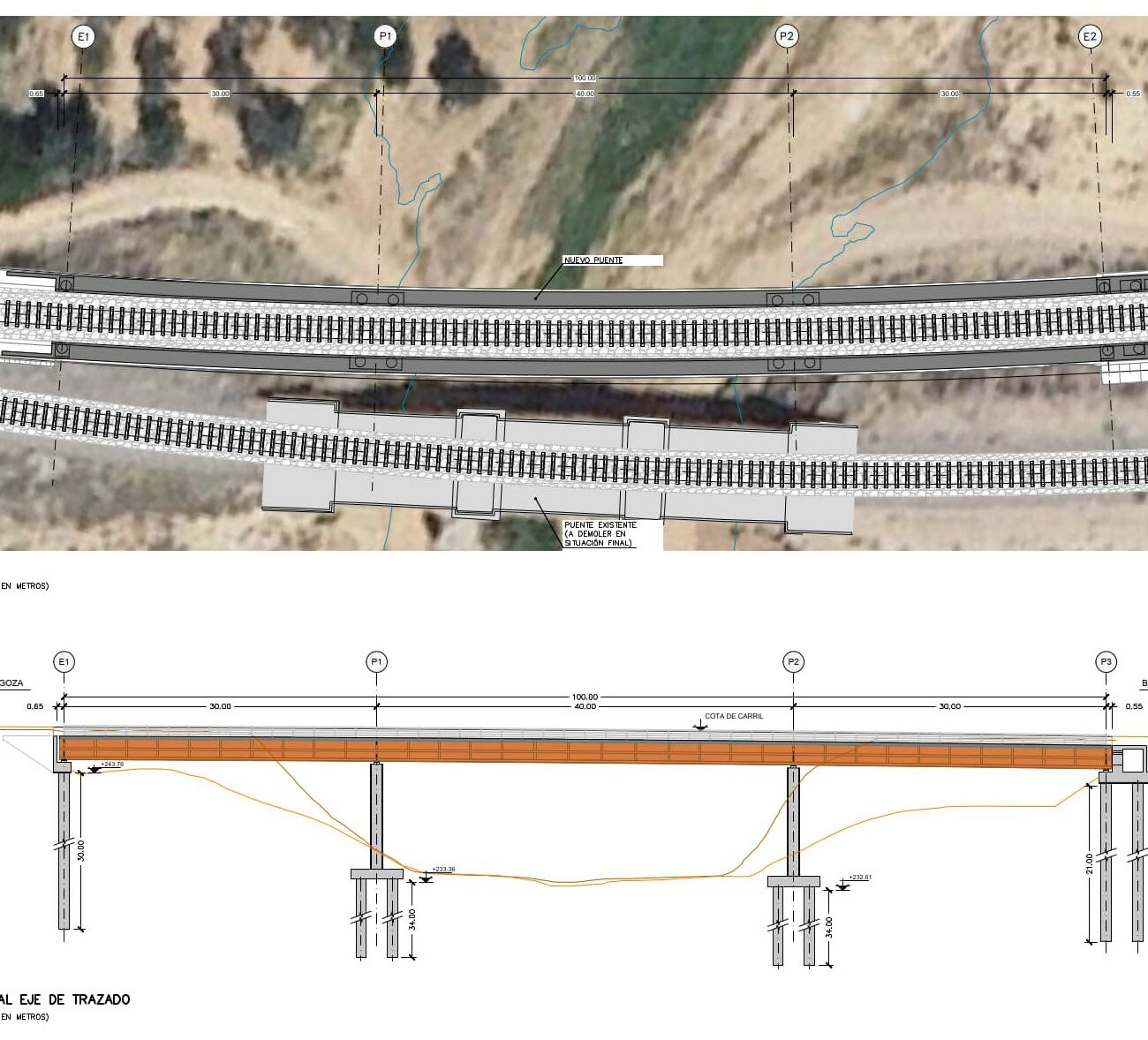
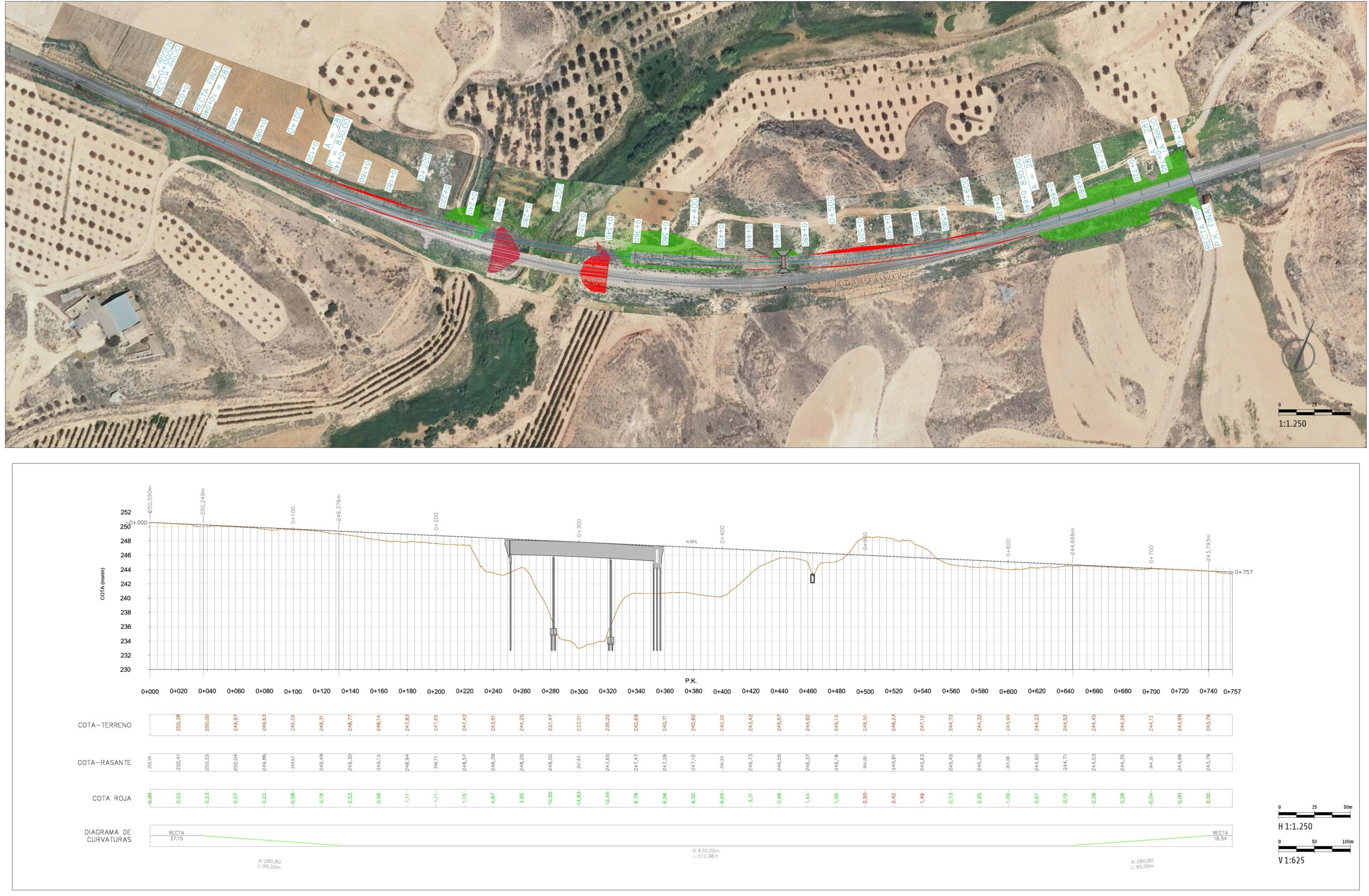
As this is an arch structure, partial or phased replacement is not feasible. Therefore, in order to minimise disruption to railway operations as much as possible, a realignment of the route is proposed on the inside of the existing curve. This solution not only minimises the length of the works, but also improves the alignment by means of a curve with a radius of 830 m and an optimised distance from the original bridge.
Taking into account the territorial, construction, and economic constraints, a new 100 m long bridge has been designed, with a 40 m central span over the watercourse and two 30 m side balancing spans. Given the low bearing capacity of the ground and the difficult access to the site—limited to dirt tracks or the railway line itself—a continuous composite deck superstructure has been selected. This typology reduces the weight of the components, facilitating transport and assembly with light machinery. The cross-section, consisting of a composite box girder, helps absorb the torsional forces generated by the curved alignment. In addition, weathering steel (Corten type) has been selected for the steel structure in order to minimise maintenance requirements.
Once the new bridge is brought into service, the existing structure will be taken out of use. However, there will still be a risk that the progressive deterioration of its faces could lead to debris falling onto the lower paths and the watercourse. For this reason, its controlled demolition has been planned through a detailed and progressive procedure, always ensuring the stability of the structure in order to avoid unbalanced thrusts that could cause the sudden collapse of the arches.
To provide the best experiences, we use technologies like cookies to store and/or access device information. Consenting to these technologies will allow us to process data such as browsing behavior or unique IDs on this site. Not consenting or withdrawing consent, may adversely affect certain features and functions.