
Montcada Junction station is located in the municipality of Montcada i Reixac, Barcelona, and lies at kilometre point 356+700 on Line 220 Lleida-Pirineus-Junction Vilanova and at kilometre point 2+400 on Line 222 Junction Aigües-La Tour de Carol-Enveigt.
The track layout at Montcada station is currently undergoing a complete reconfiguration of its railway infrastructure, tracks and platforms, with the aim of transforming it into a new terminal for regional services that is efficient, safe and accessible. Within this context, the refurbishment scheme is completed with the design of a new passenger station, an underground passage connecting the station and the platforms, and the definition of canopies over the platforms, in addition to the urban development works around the new station to ensure its integration into the urban fabric.
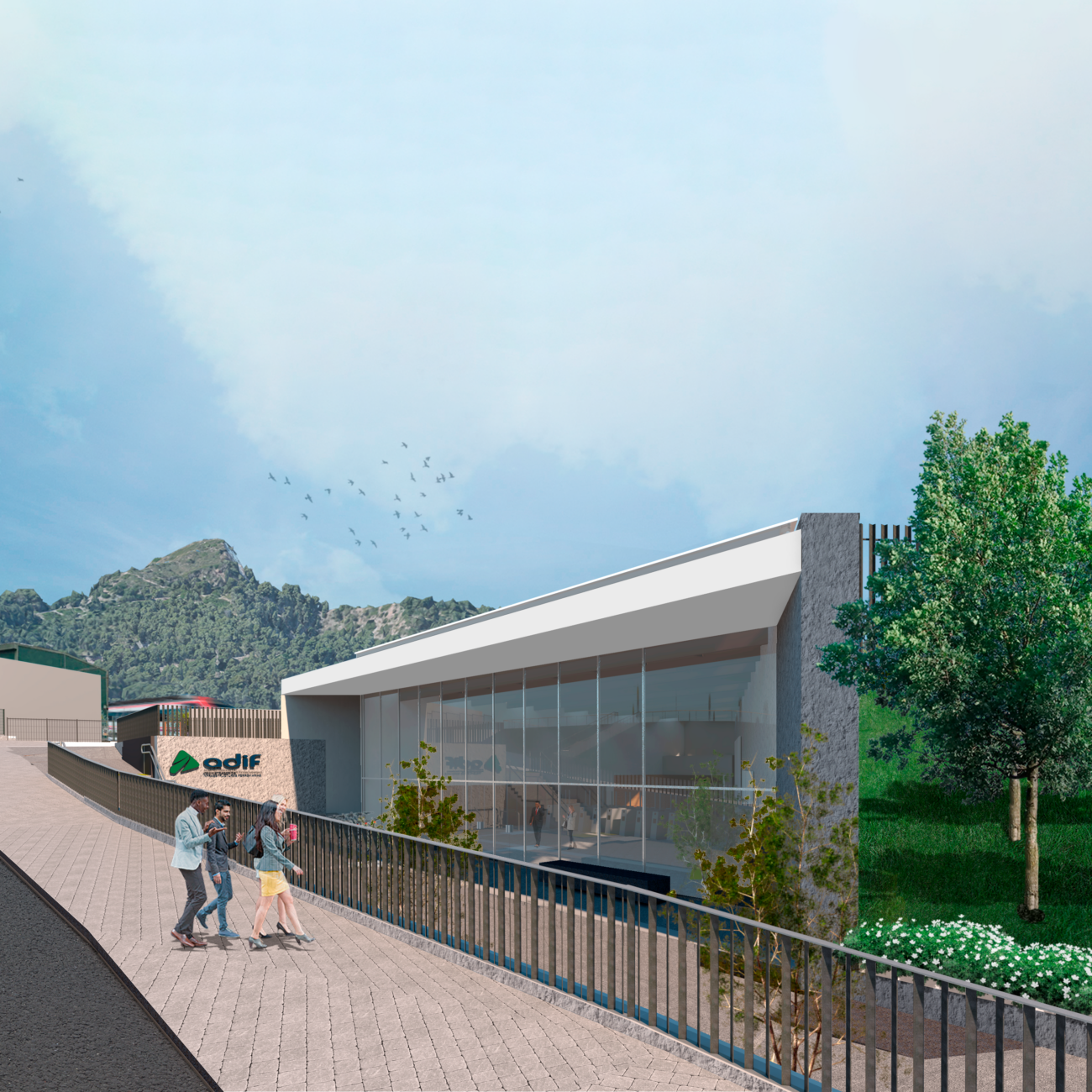
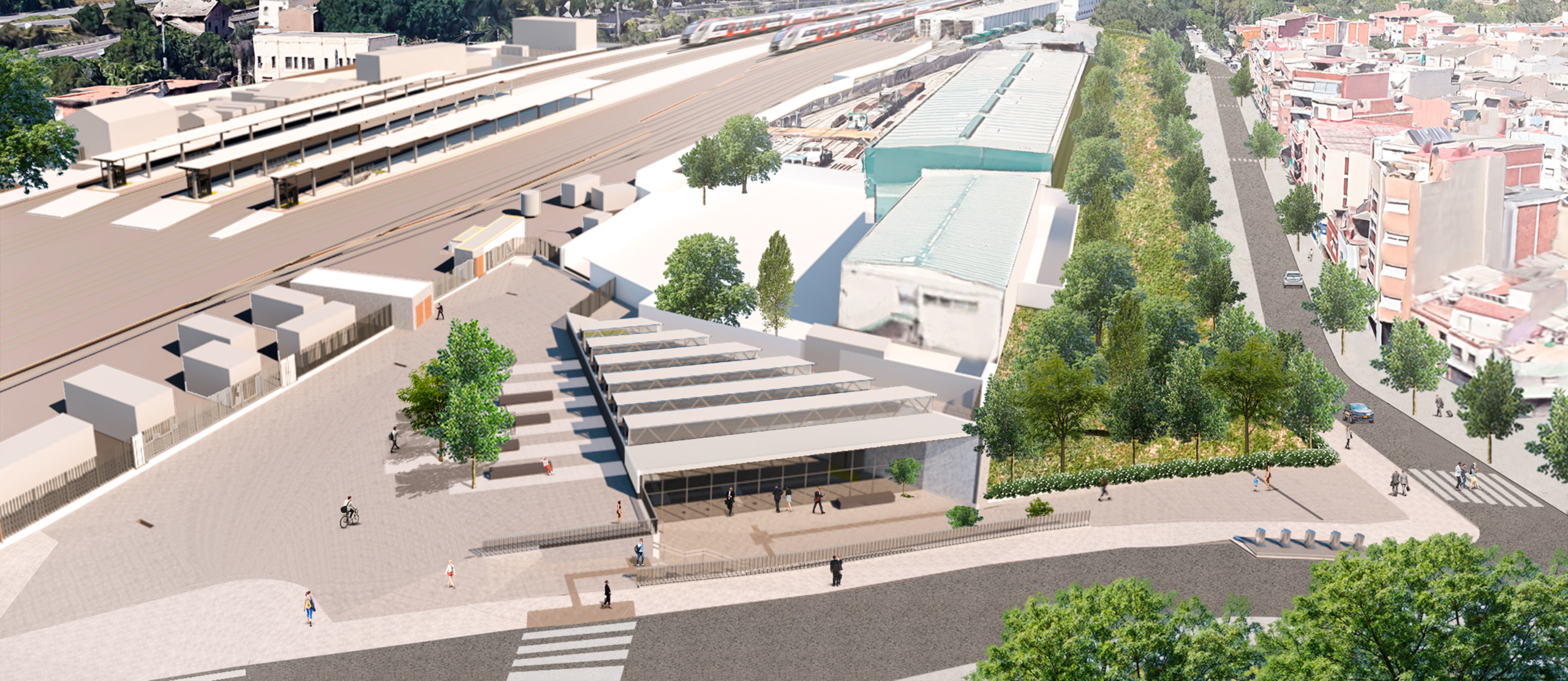
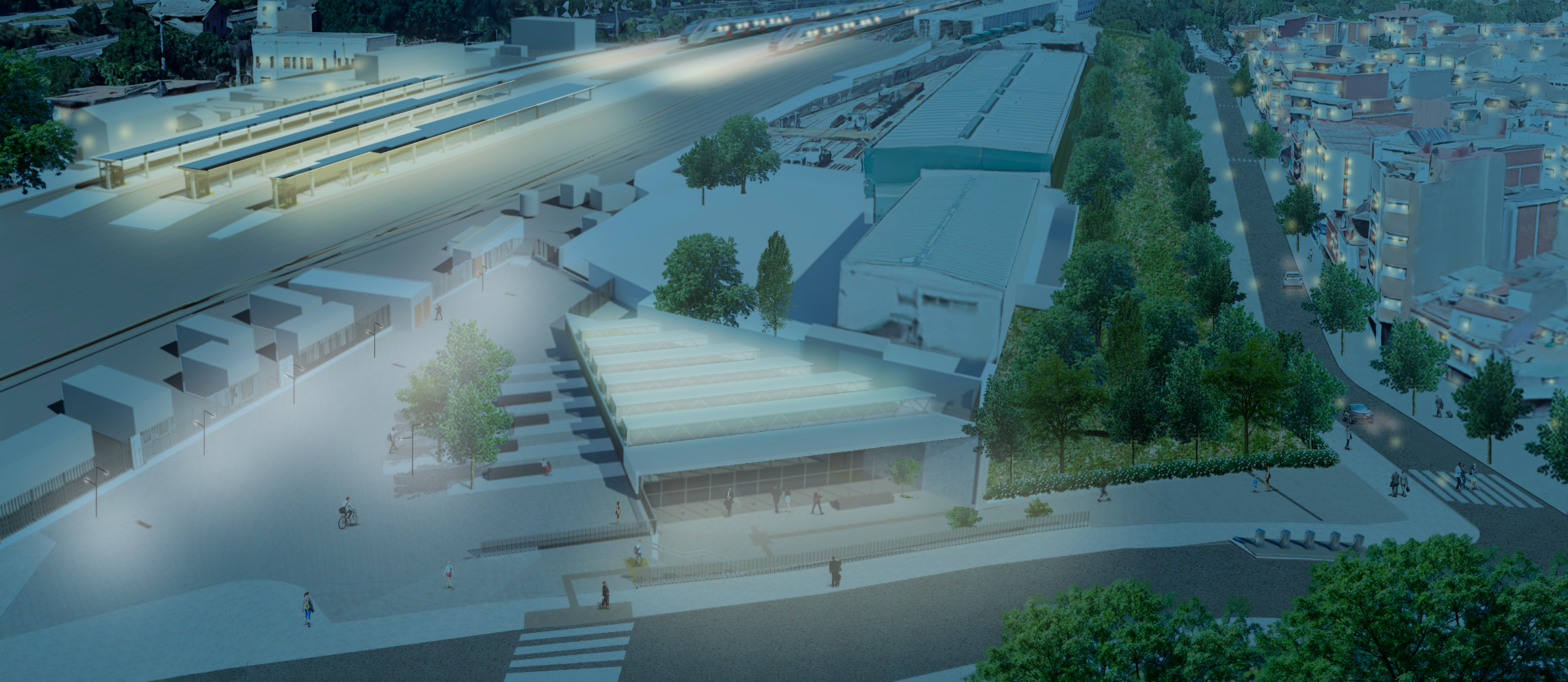
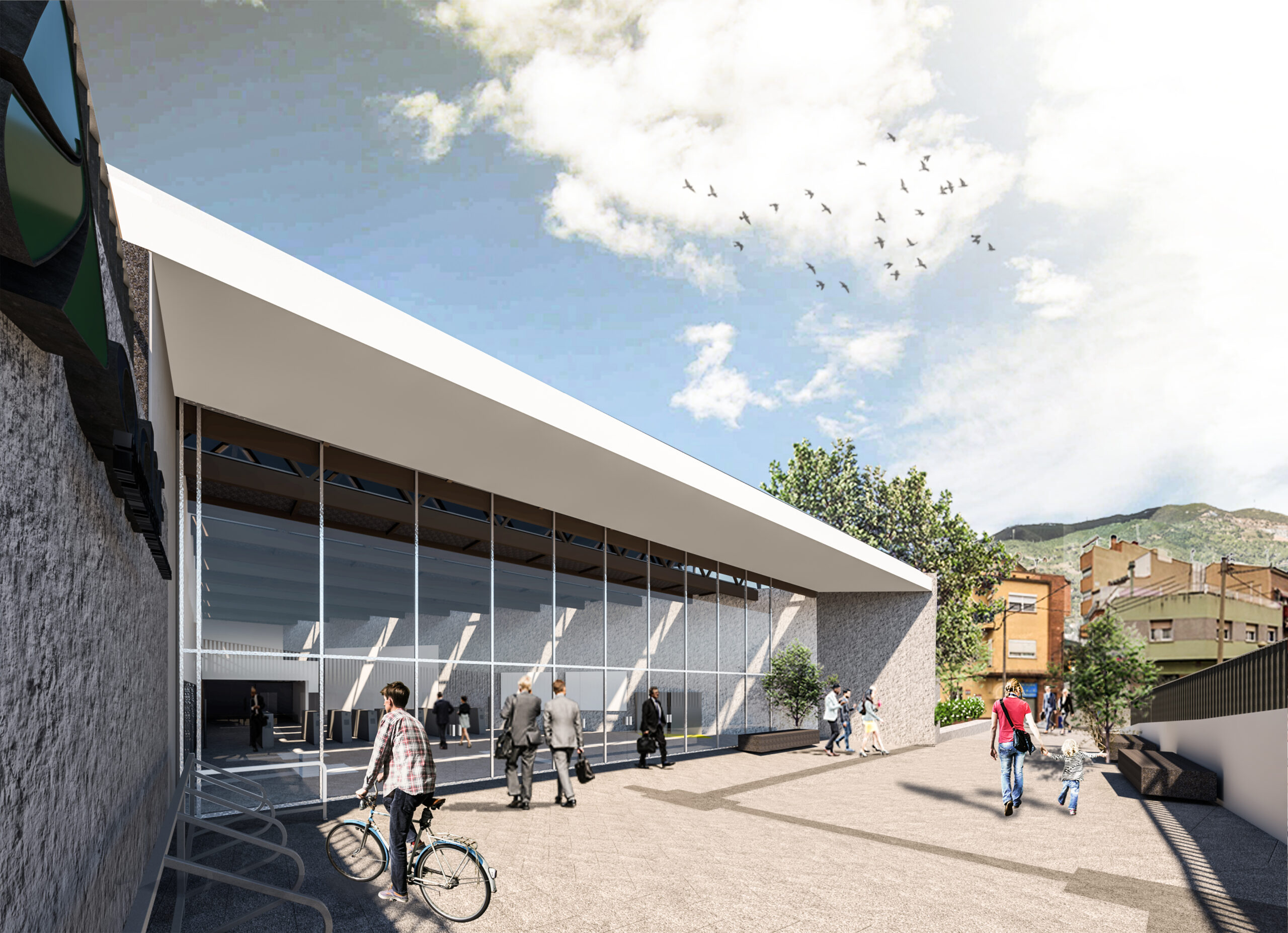
The new passenger building is positioned at the junction of Carrer Batería and the La Pedra car park, thereby bringing the station closer to the city. The new construction is conceived as a large entrance frame, a new gateway that gathers the flows from its immediate surroundings and channels them towards the underground passage and, in turn, to the station platforms.
The building is integrated into the urban environment thanks to its appropriate adaptation to the topography, which means it is partially embedded in the ground, thus aligning with the level of the station’s underground passage. The intervention is completed with a new public square connected by a staircase to the station entrance area. Its design relates to the architectural idea of the building’s compositional linearity and that of the new platform canopies, thereby helping to unify the concepts throughout the whole scheme.
From a structural point of view, the passenger building is conceived as a single structure without expansion joints, thus avoiding the durability and maintenance issues that are common in structures with such joints. Particularly noteworthy is the metal roof, defined by steel trusses with spans varying between 22.50 m and 5.00 m, creating a completely open-plan space. The trusses are defined using closed steel profiles with square and rectangular sections, braced together by purlins of closed section.
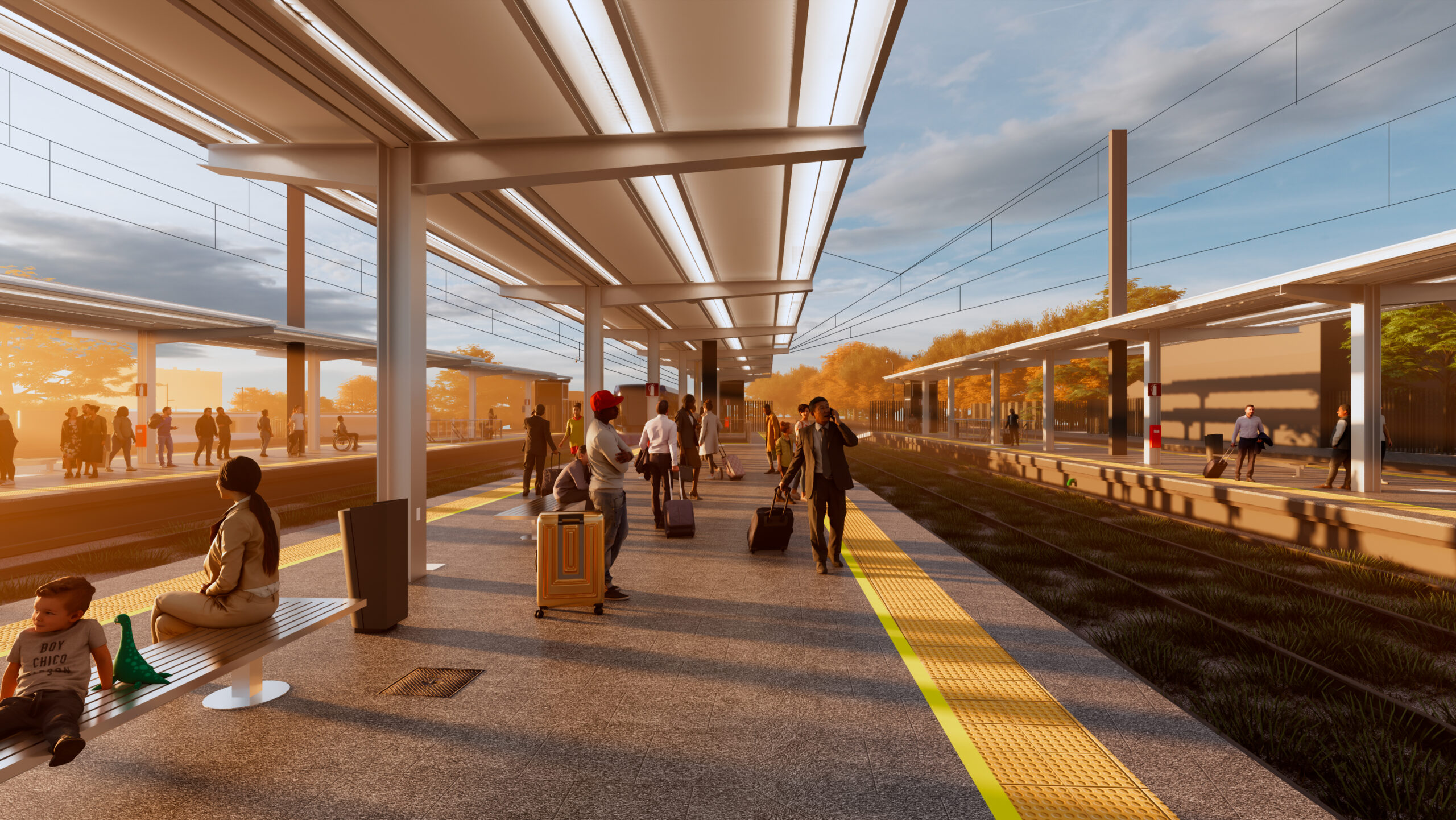
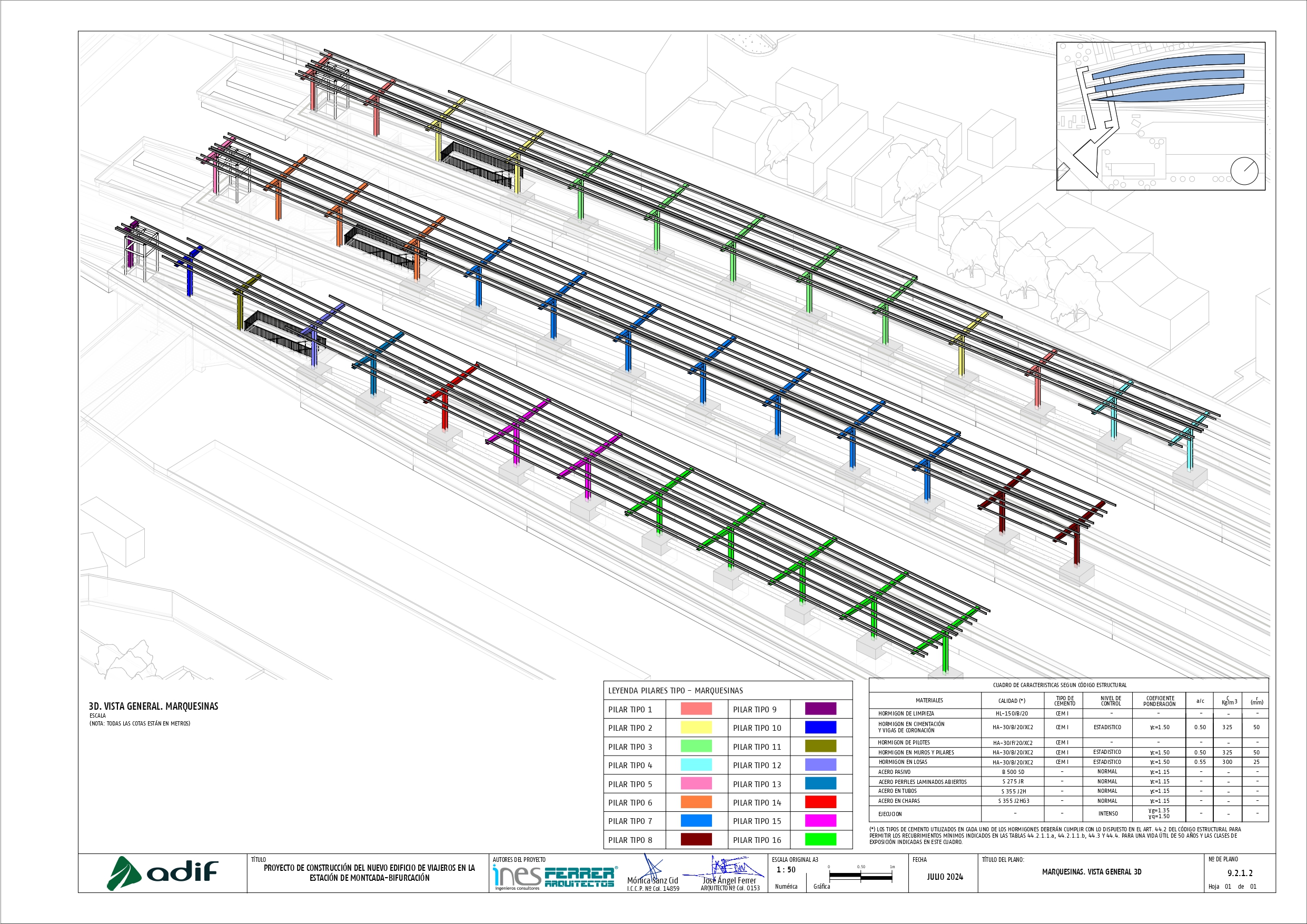
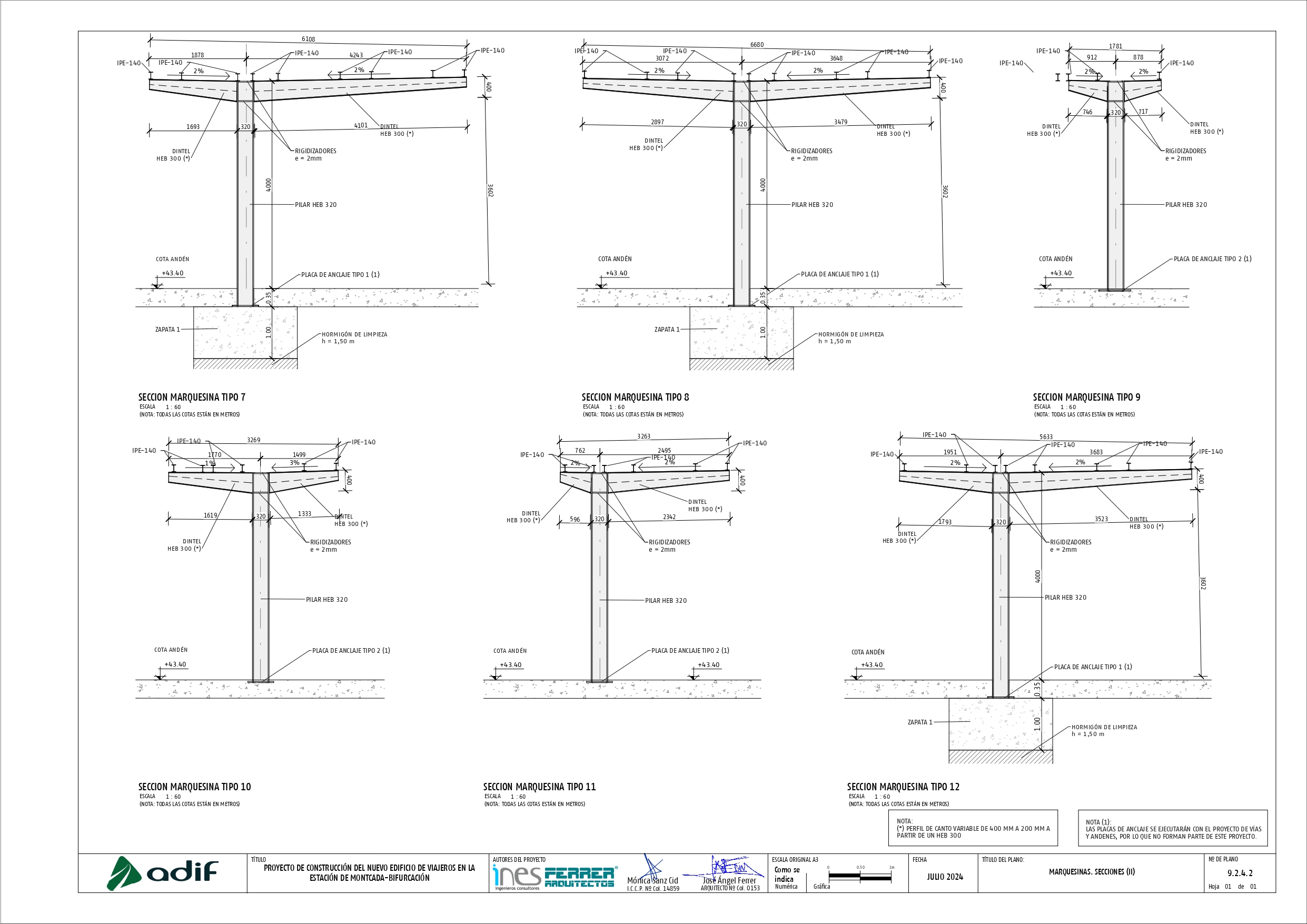
The canopies are defined by covering elements with different geometries in plan, adapting to the geometry of the platforms. From a structural point of view, a basic T-shaped scheme is defined and then adapted to the different architectural geometries. In all cases, open HEB steel profiles are used; the frames are braced by IPE purlins, which also support the canopy covering, defined by different opaque and translucent strips.
To provide the best experiences, we use technologies like cookies to store and/or access device information. Consenting to these technologies will allow us to process data such as browsing behavior or unique IDs on this site. Not consenting or withdrawing consent, may adversely affect certain features and functions.